


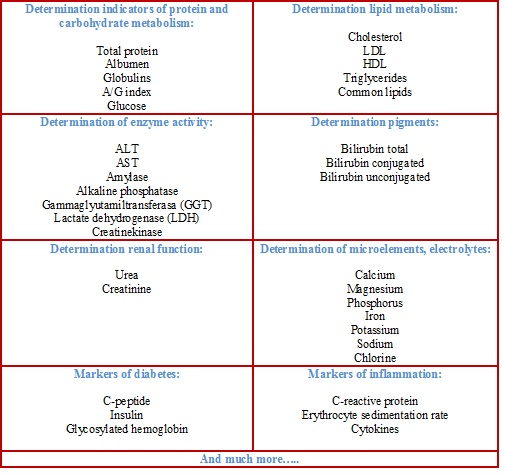
Today, toxicological and pharmacological studies it is difficult to imagine without the biochemical and hematological analysis.
These figures are extremely important for the evaluation: the effect of the study drug on organs and tissues, the body of the target, generated correctness of Experimental Pathology. On the basis of biochemical and hematological analysis can be judged on the protein, fat, carbohydrate and mineral metabolism in the body. Identified during these laboratory tests can detect abnormal changes in various organs and systems.
Today, assessment of biochemical parameters used for the analysis of not only blood, but also for the analysis of urine, bronchoalveolar lavage (flushing), exudate, bile, tissues.
Evaluation of cellular structure also holds not only for blood but for bone marrow, bronchoalveolar lavage (flushing), exudate, urine, other biological fluids.
All materials used in laboratory methods for determining passed the validation process (and/or verification) in line with modern requirements. Team members conduct regular intralaboratory quality control laboratory tests.
Employees of the group of Biochemistry and Haematology are high-level experts, regularly undergoing further training. In the group there are three candidates of sciences, doctor of clinical laboratory diagnostics, laboratory assistant.
Research carried out on an automatic biochemical analyzer “A-25” company “Biosystem” (Spain). The analyzer allows you to determine in biological fluids full range of biochemical parameters, such as carbohydrate, protein, lipid and mineral metabolism that characterize the work of bodies, organs and body systems as a whole.
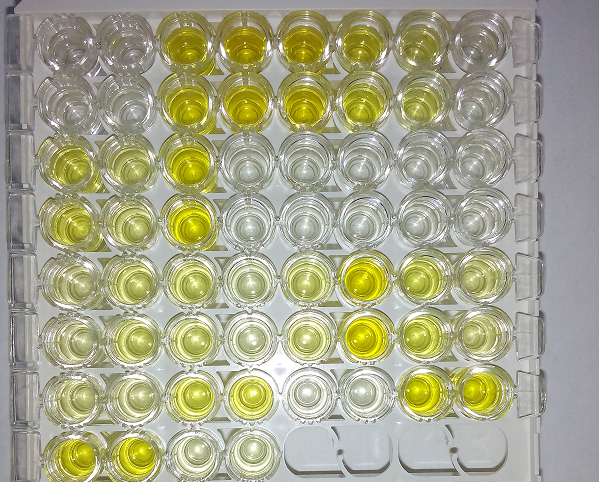
To identify additional markers of various pathologies in the laboratory are used by ELISA analysis.
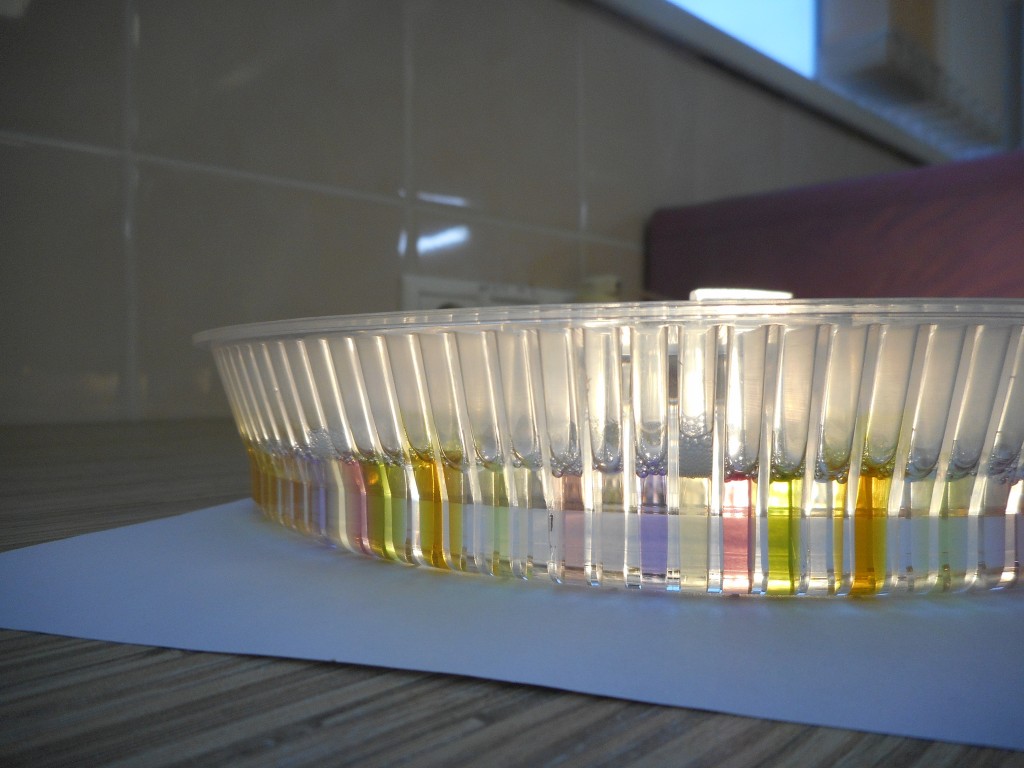
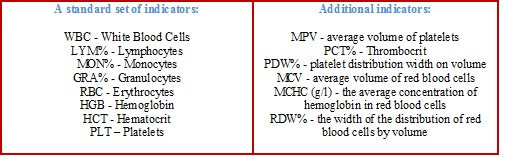
Hematological analysis to determine the blood of various animals (rats, rabbits, hamsters, guinea pigs, ferrets, mini-pigs, etc.), specialized veterinary analyzer: «Abacus Junior Vet», and «Mythic-18-Vet». If necessary, blood smears are performed manually.
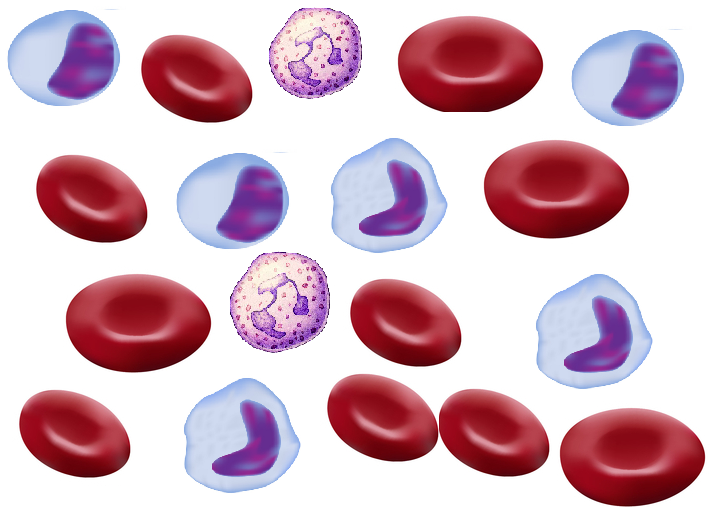

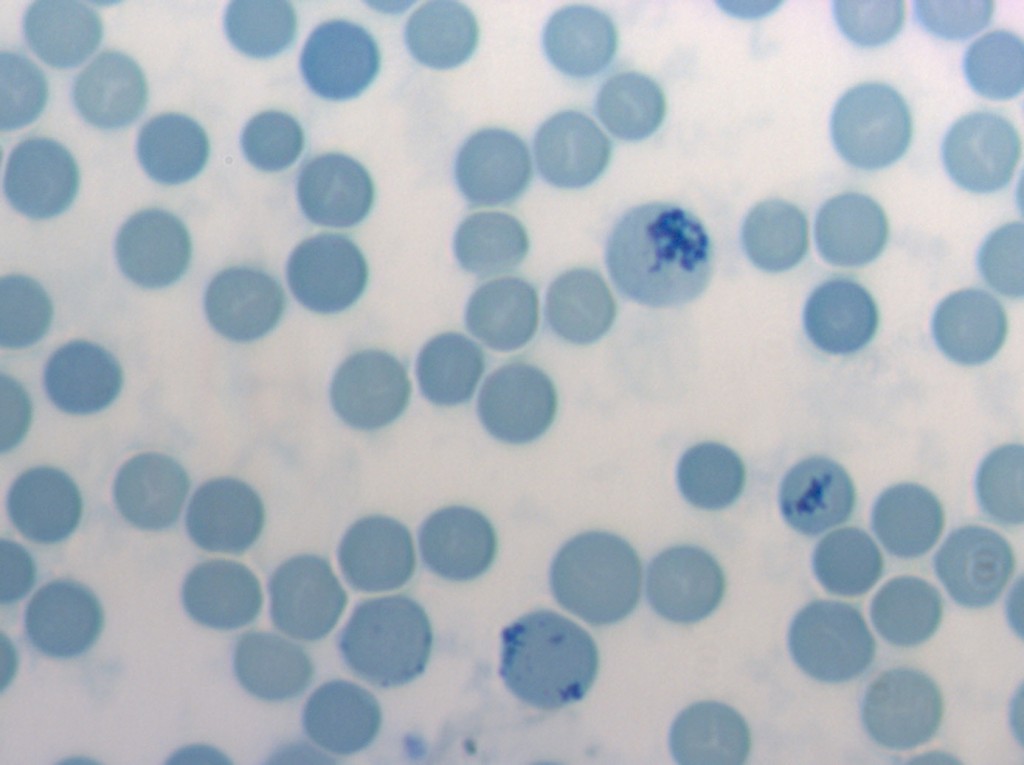
Schematic representation of the blood cells Reticulocytes in blood smear of a rabbit
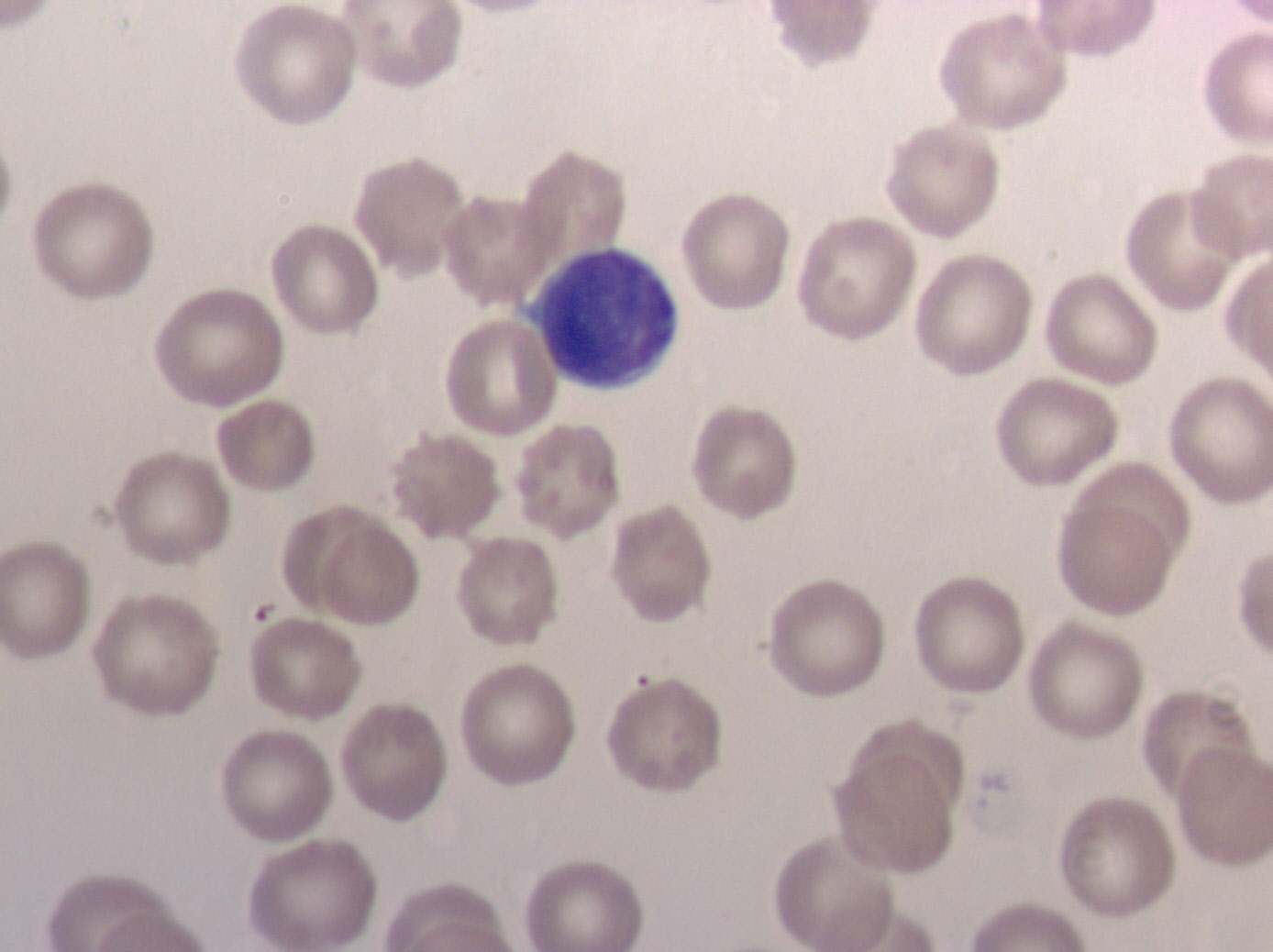
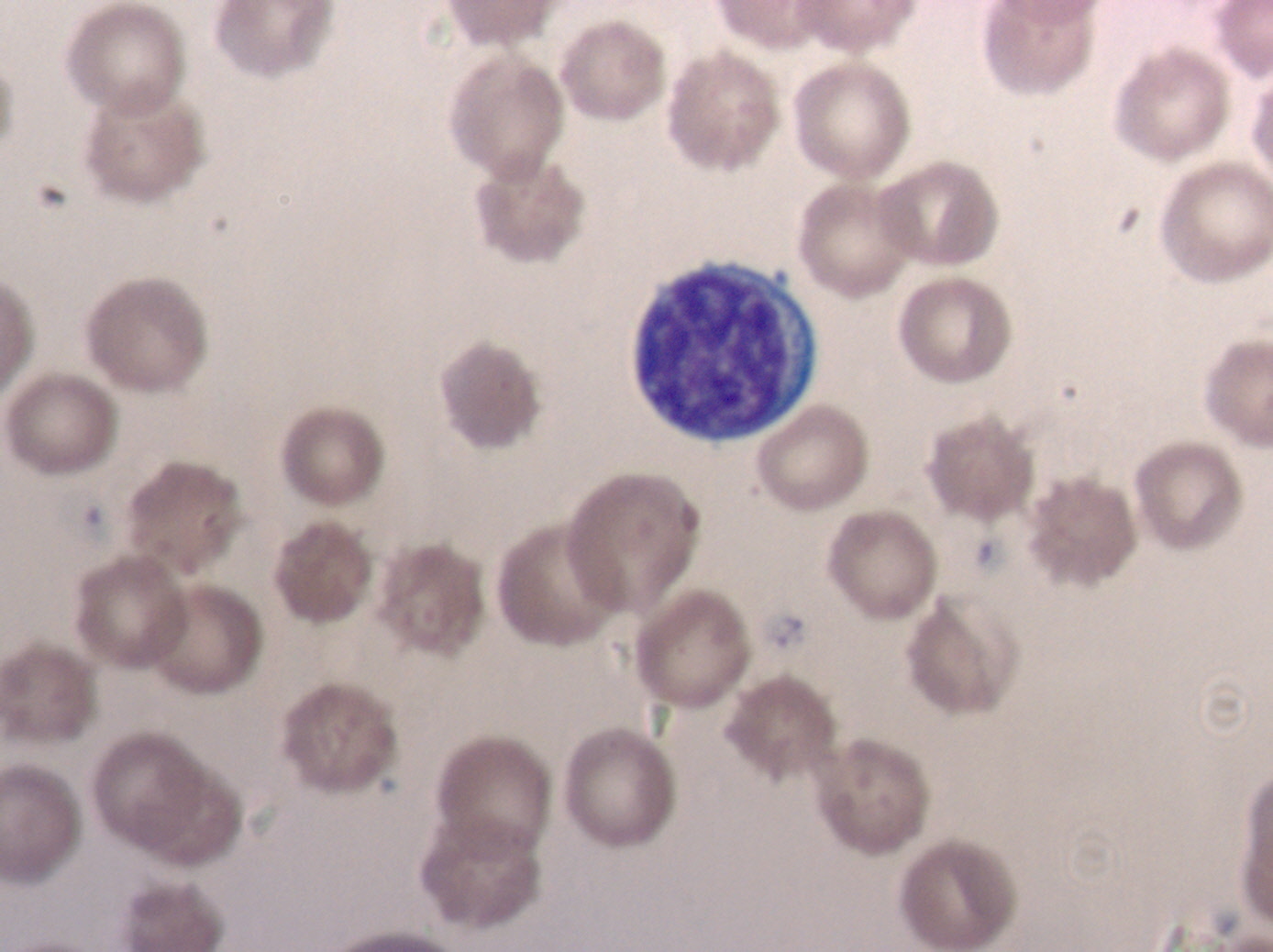
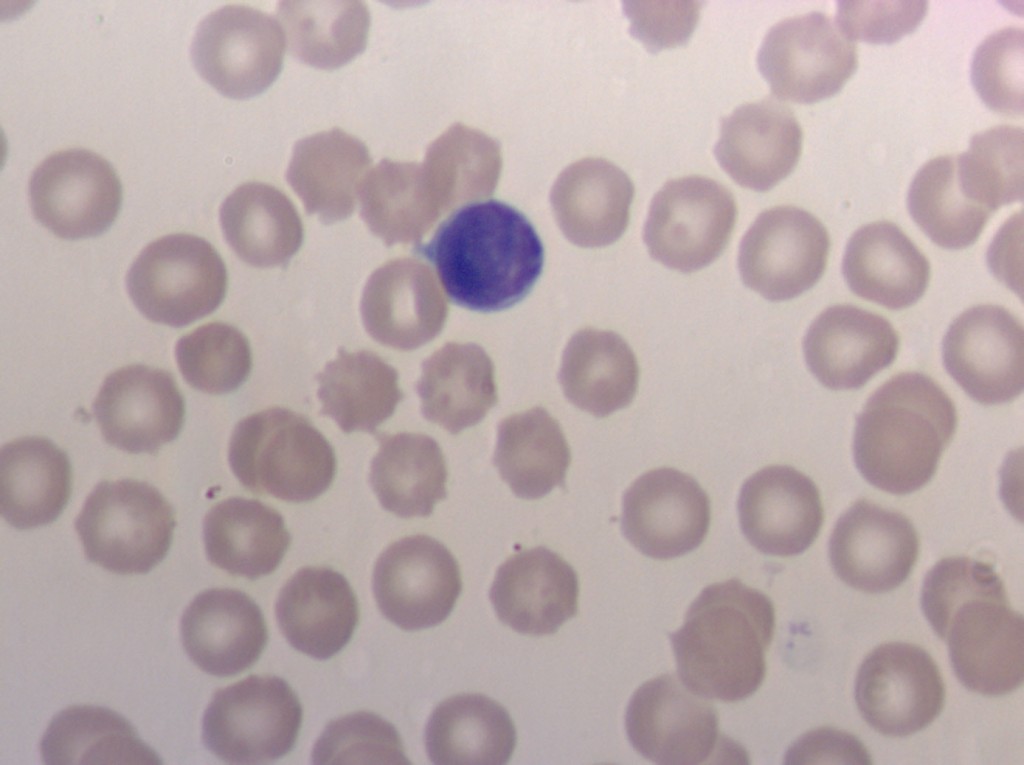
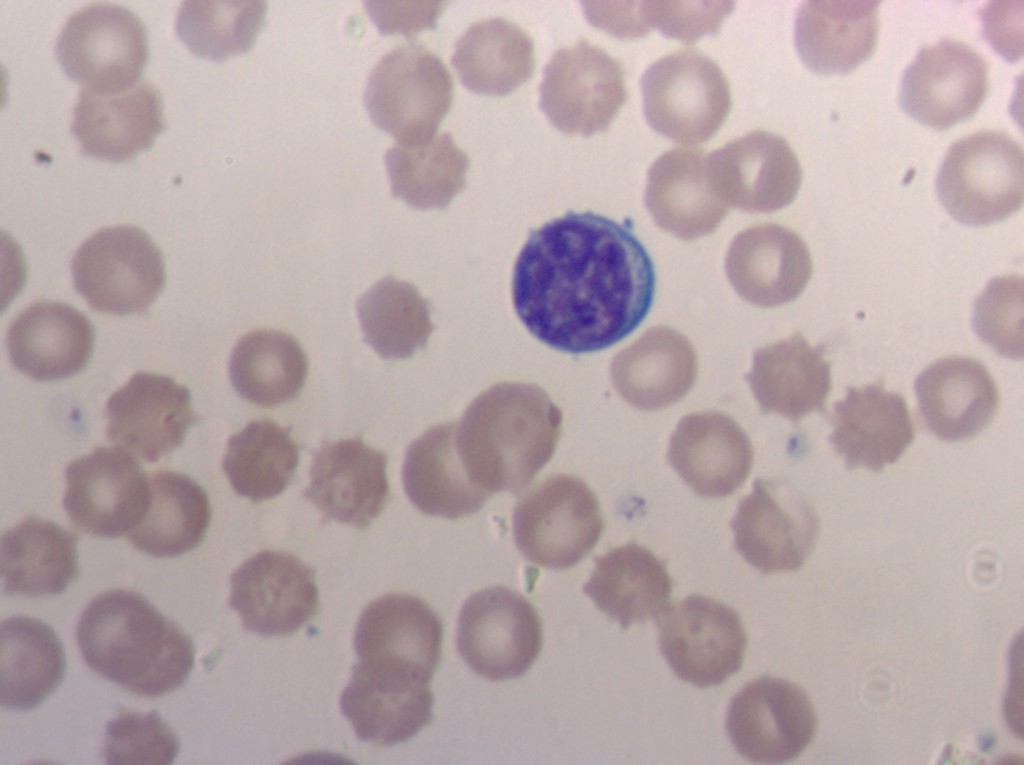
In the peripheral blood lymphocyte rat

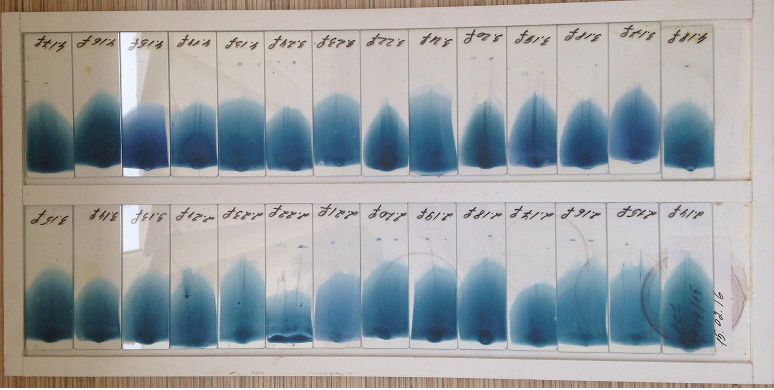
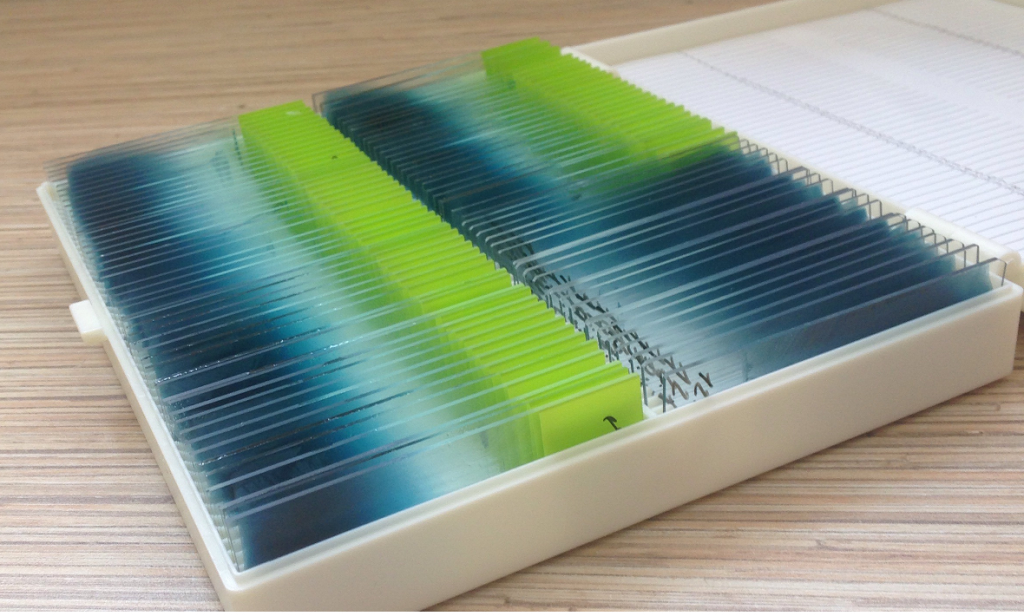
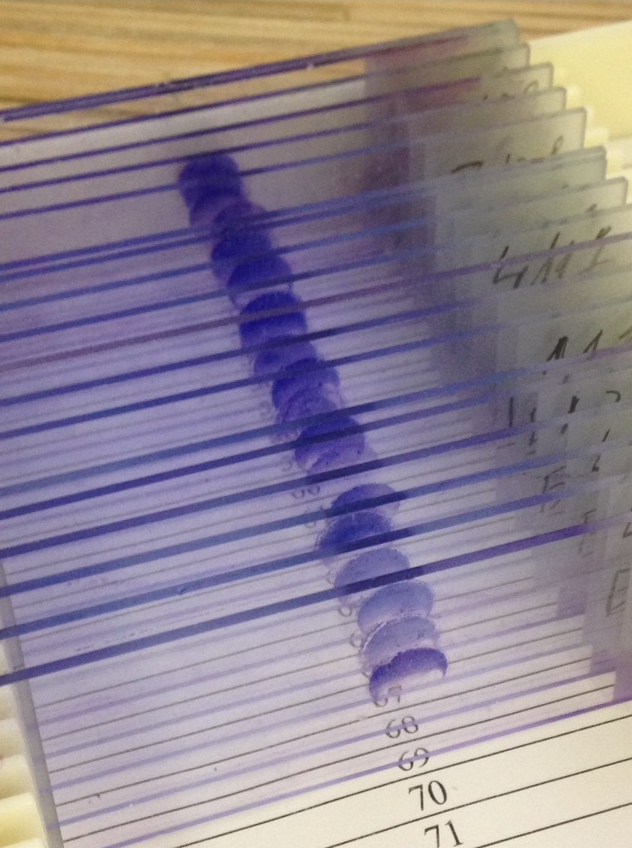
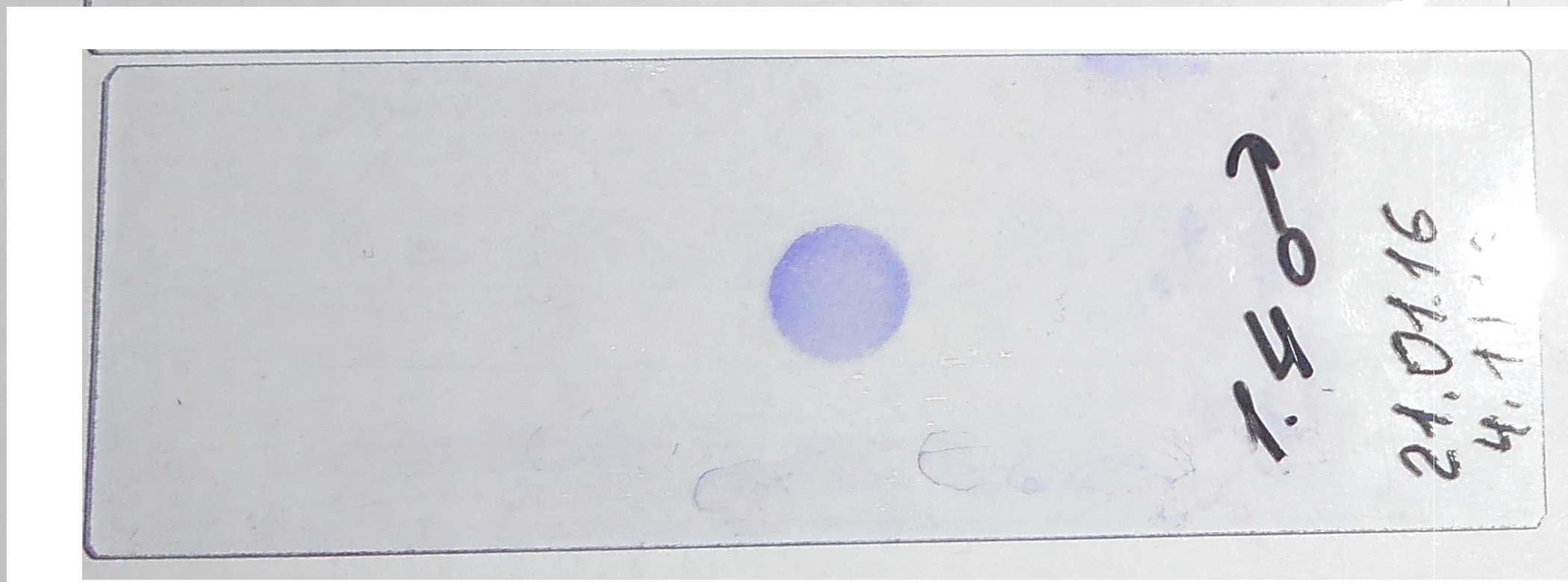
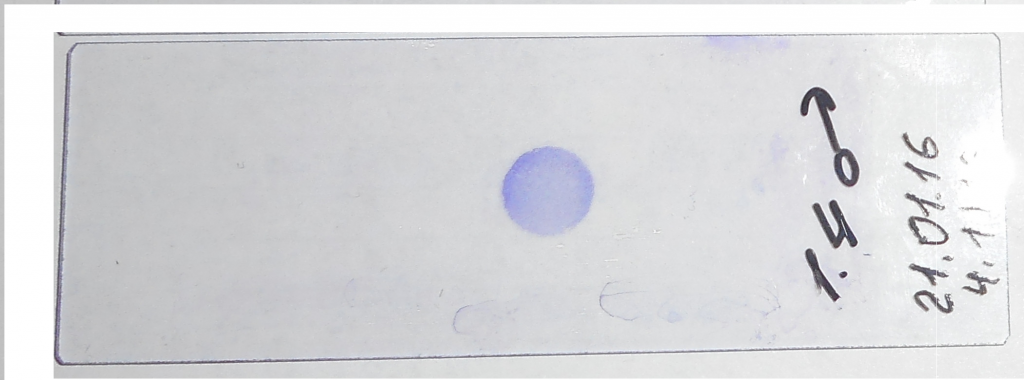
Storage stained smears
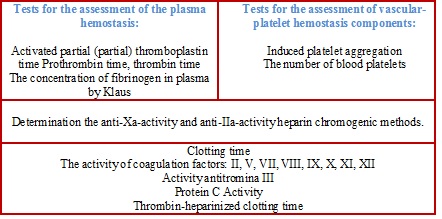
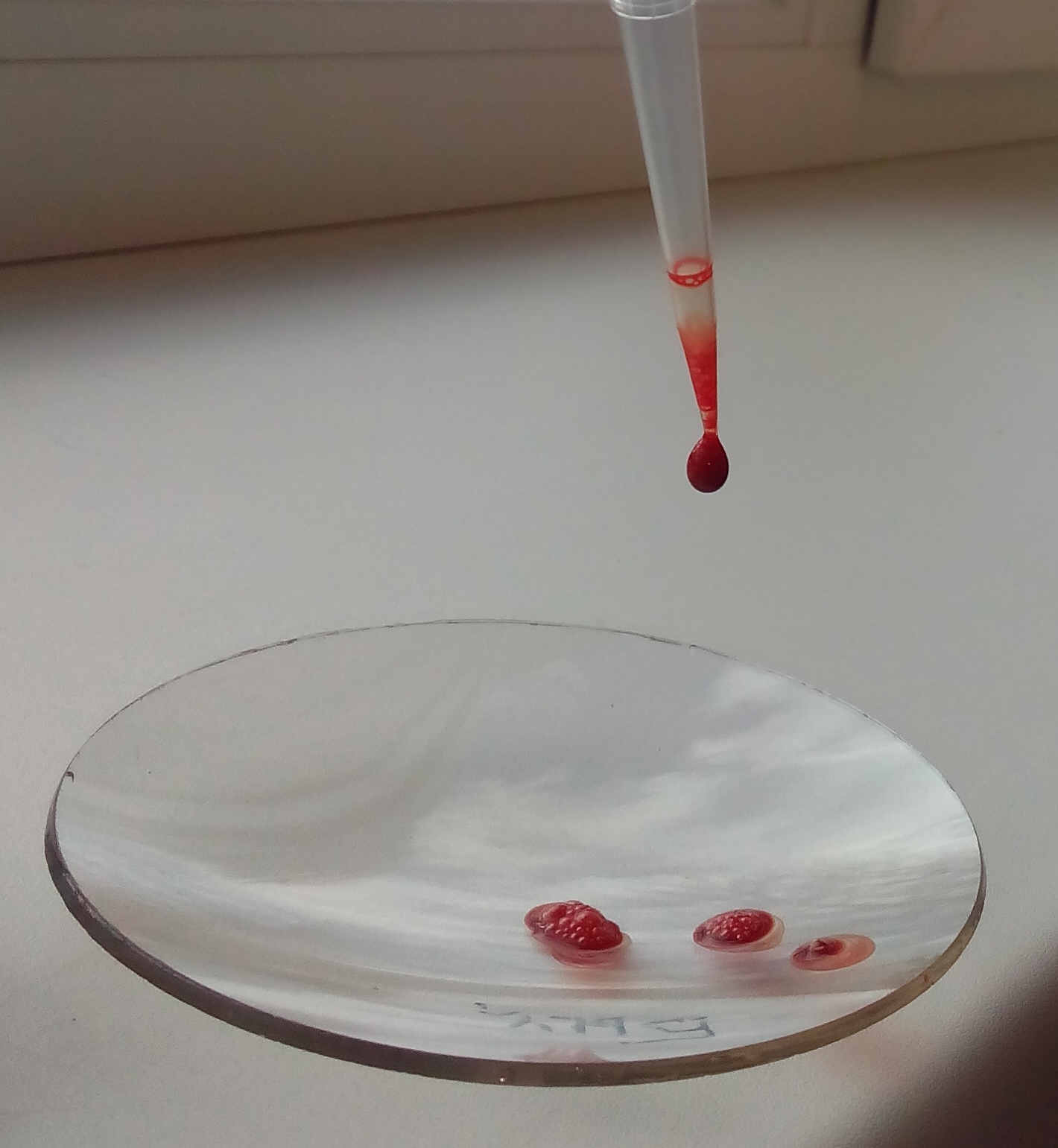
Performed on coagulometer “AПГ2-02-P.”
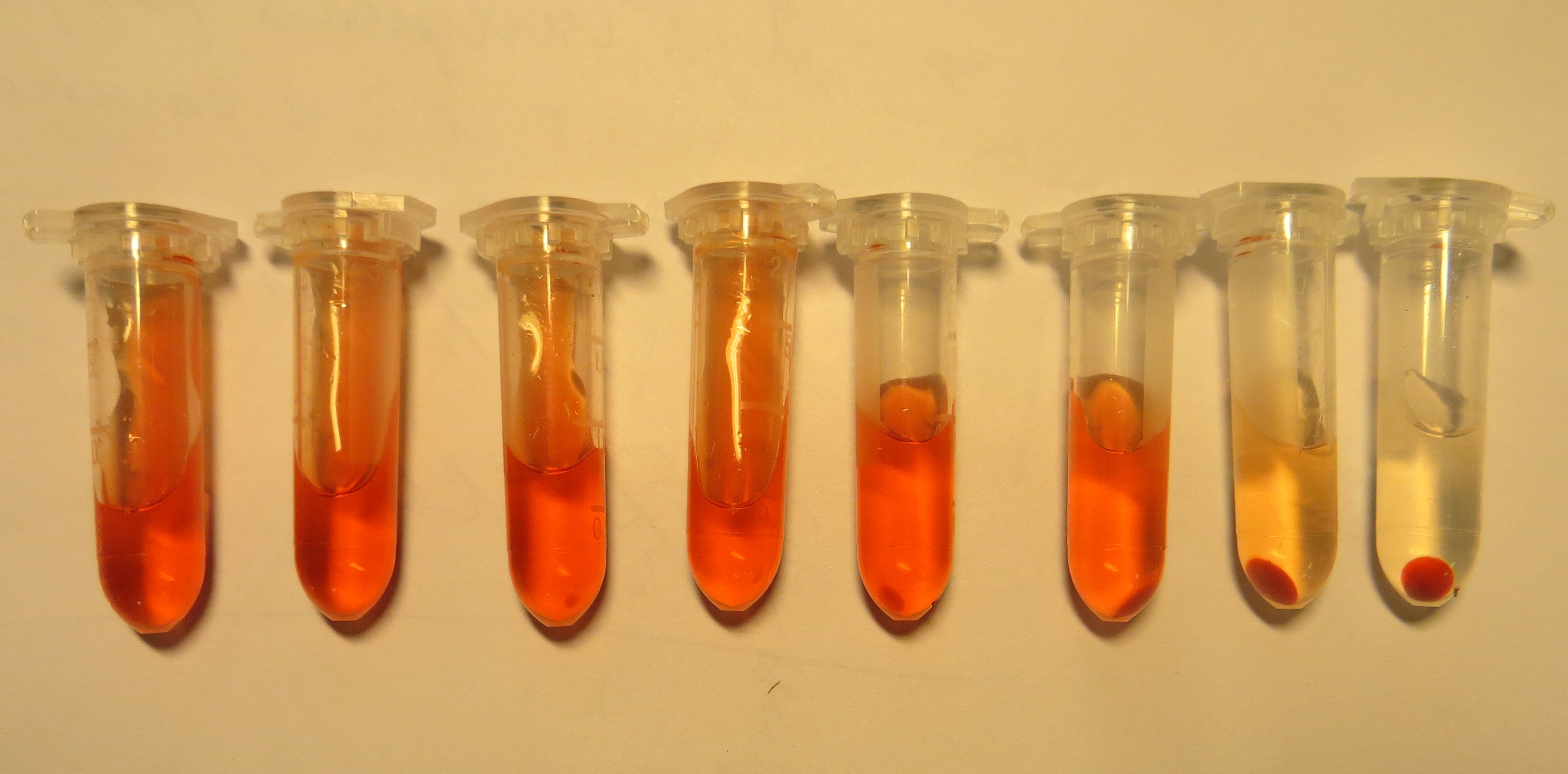
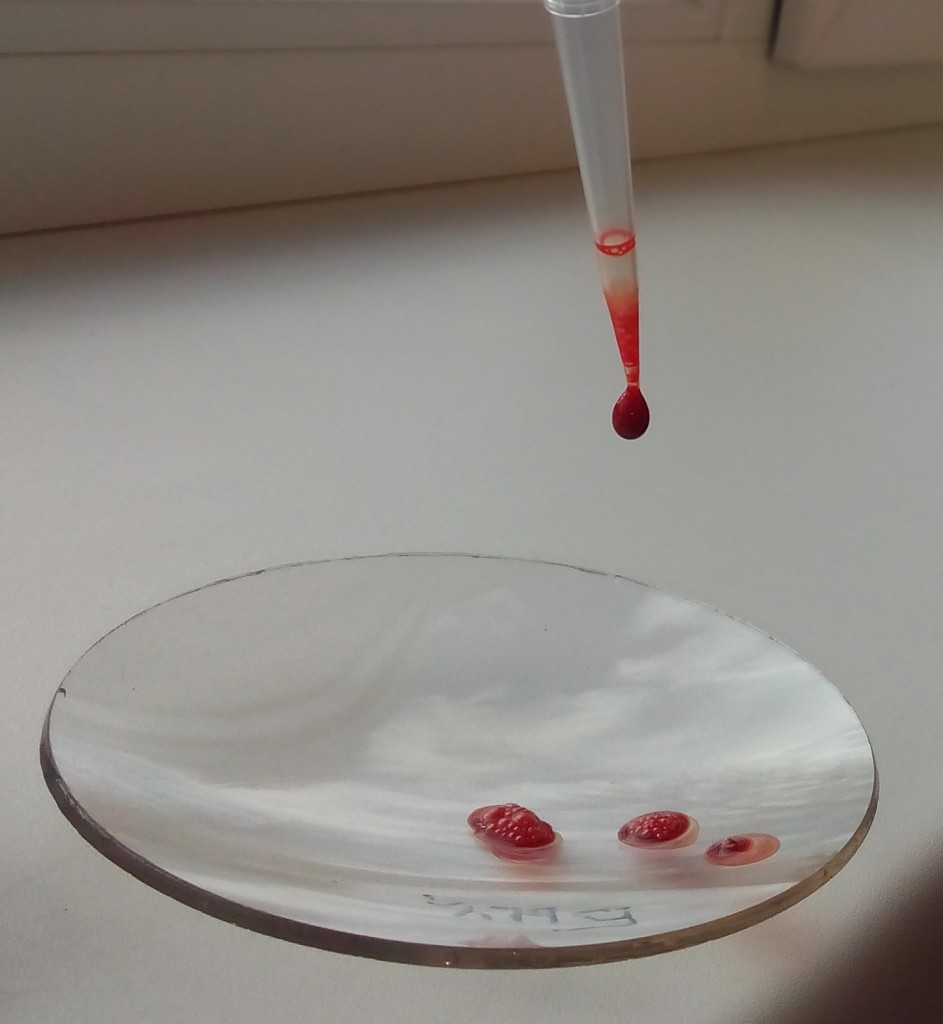
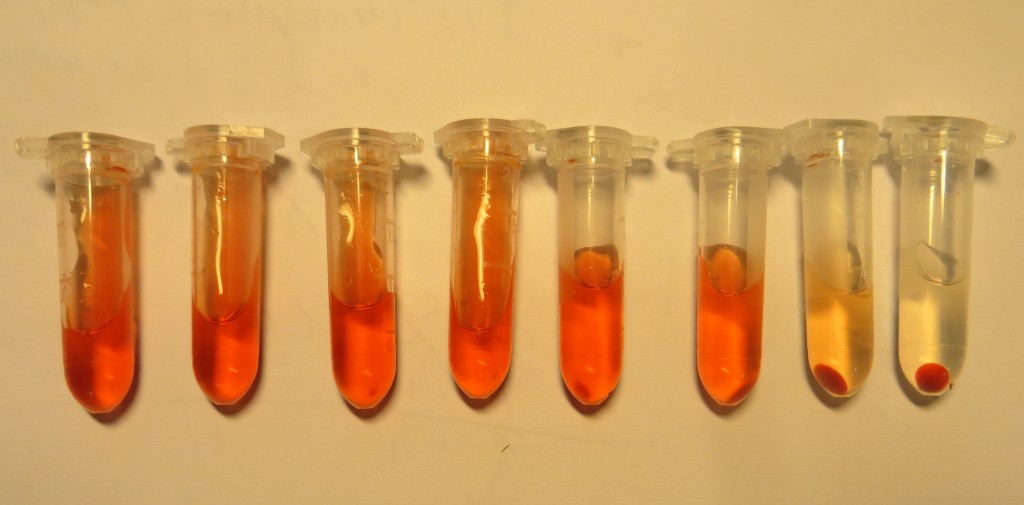
Evaluation of resistance of red blood cells
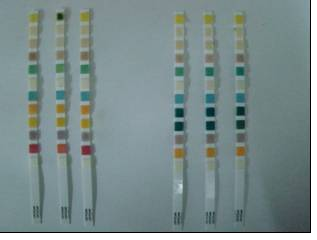
Urine analysis is performed on a portable analyzer HandUReader urine (“77 Elektronika Kft.», Hungary). With the help of the analyzer is performed semi-quantitative determination of the concentration range (level) of analytes in automatic mode using the test strips dry chemistry method.
If necessary, carry out evaluation of the urine sediment microscopy it is counted in multiple fields of view at high magnification microscope content of formed elements, bacteria, epithelial cells, crystals.
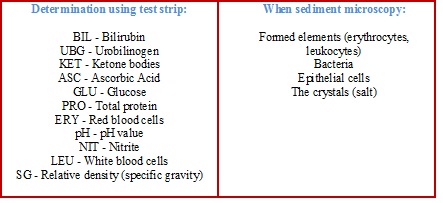
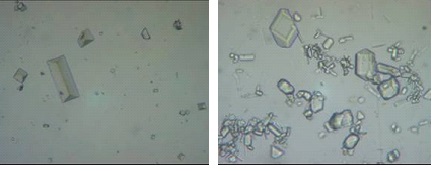
The crystals (salt)
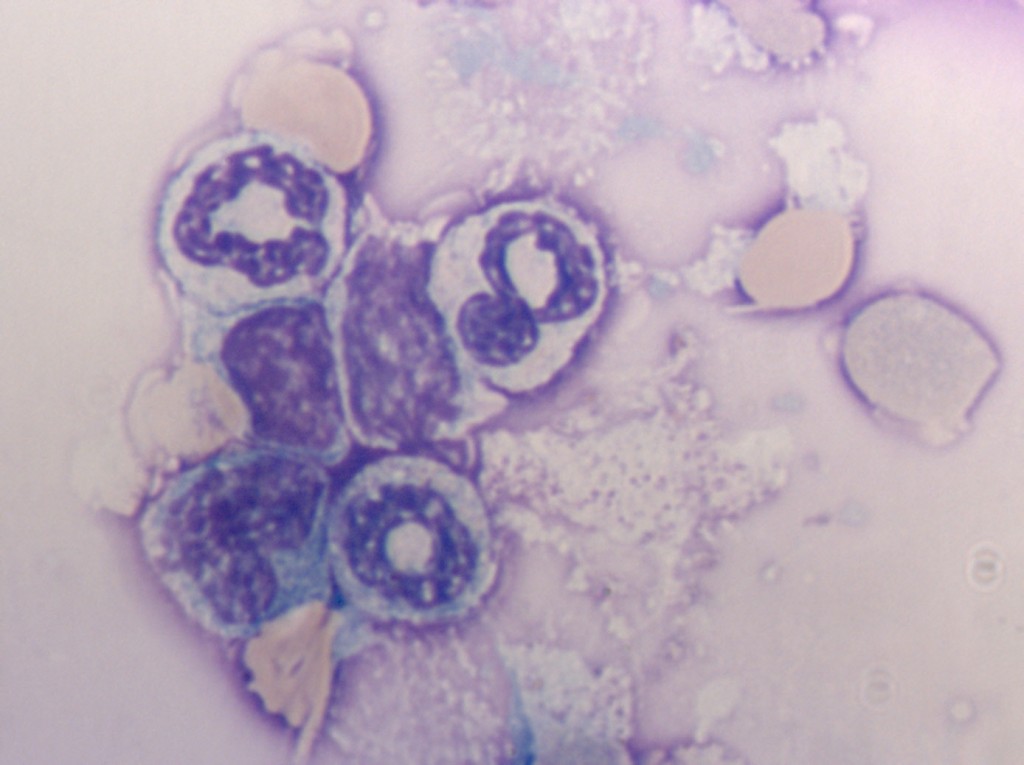
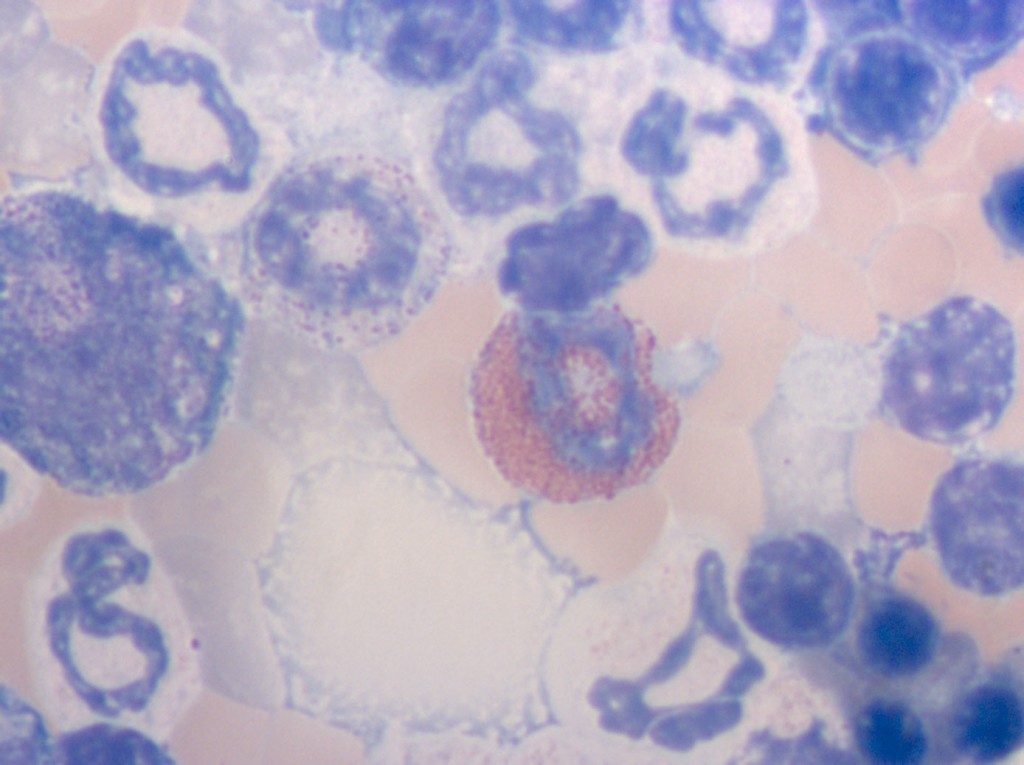
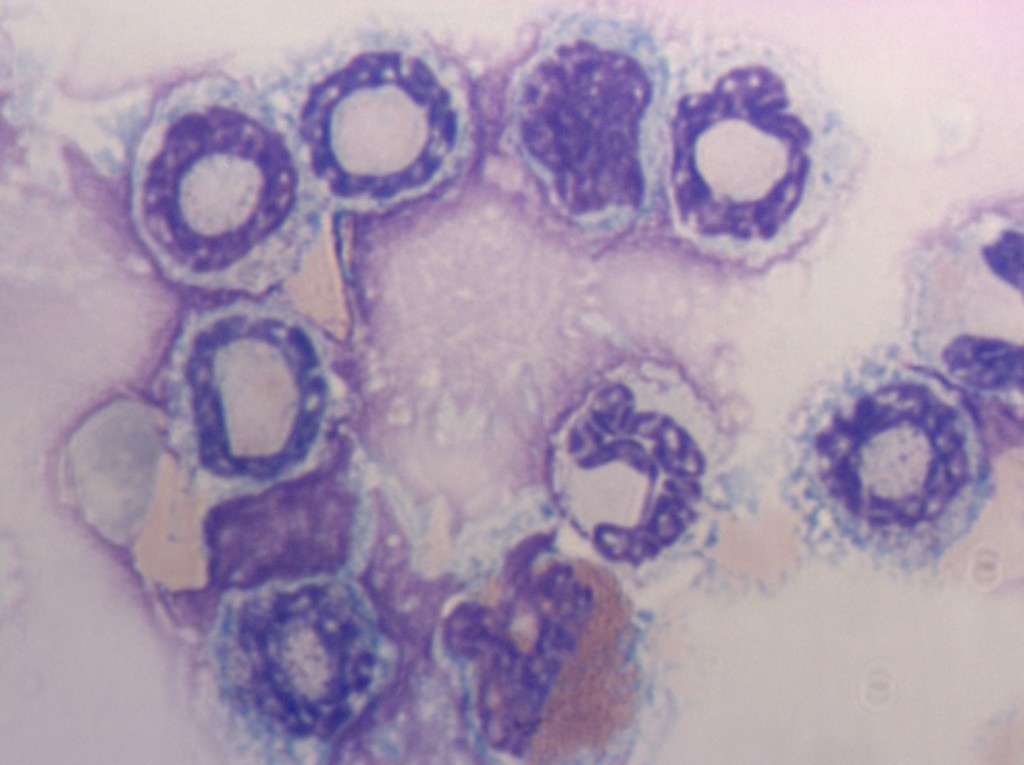
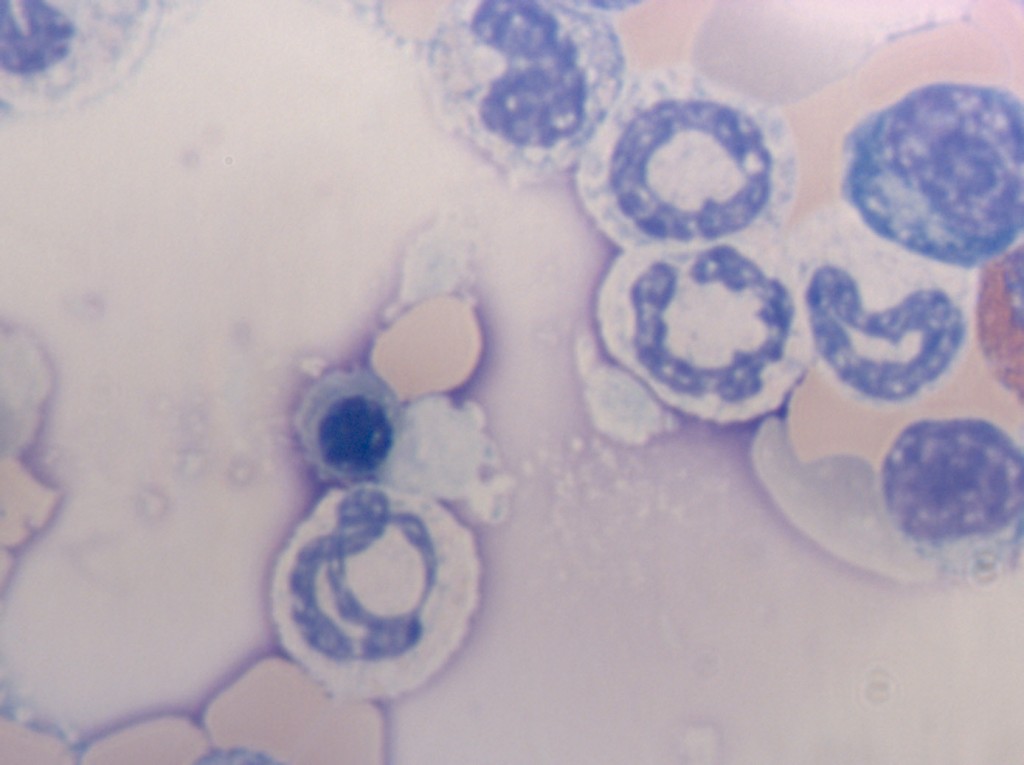
When working with experimental animals after bone marrow extraction from the proximal femur prepare smears using cytological centrifuge and stained them Mine-Grunwald are stained with Giemsa.
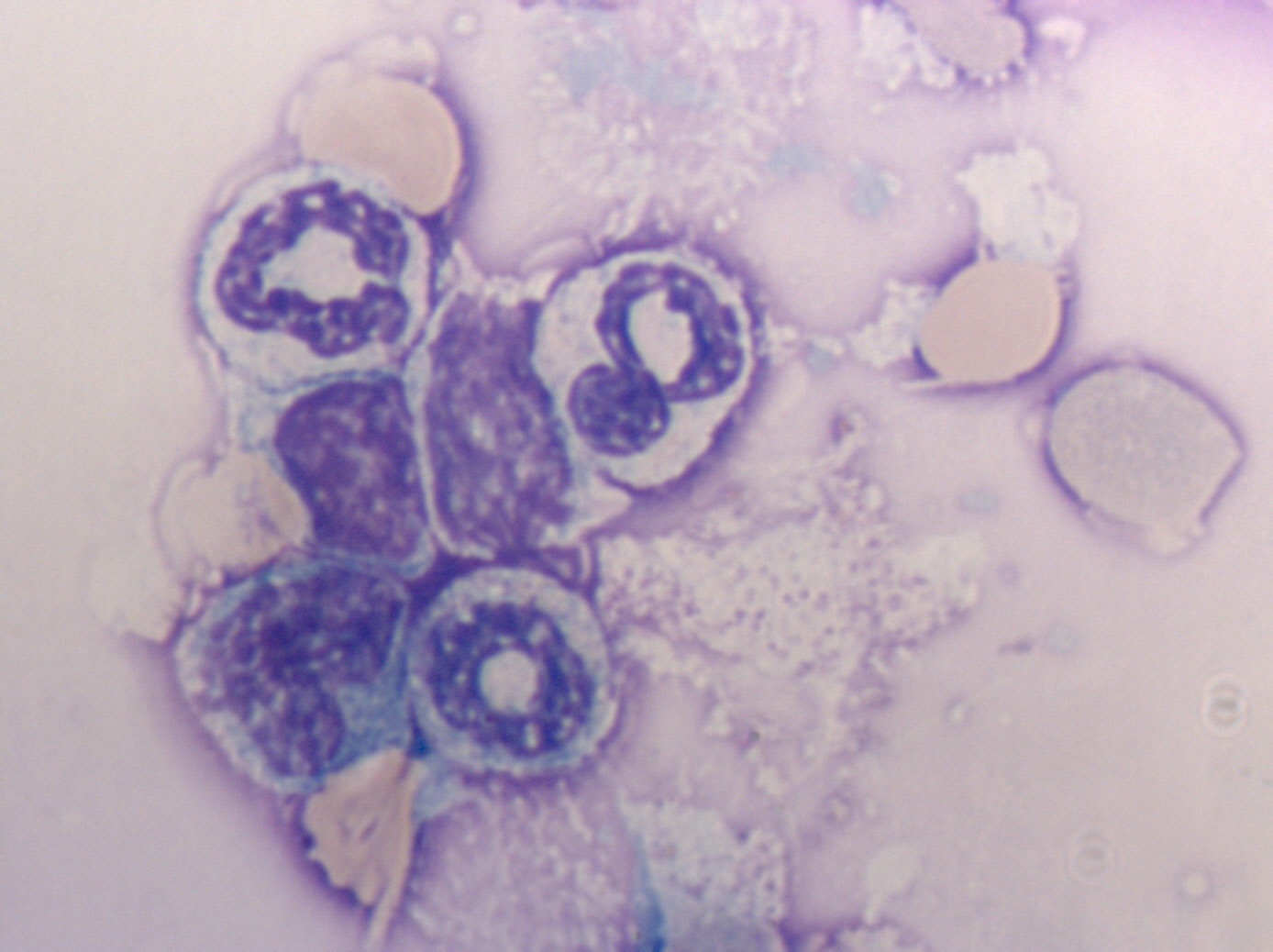
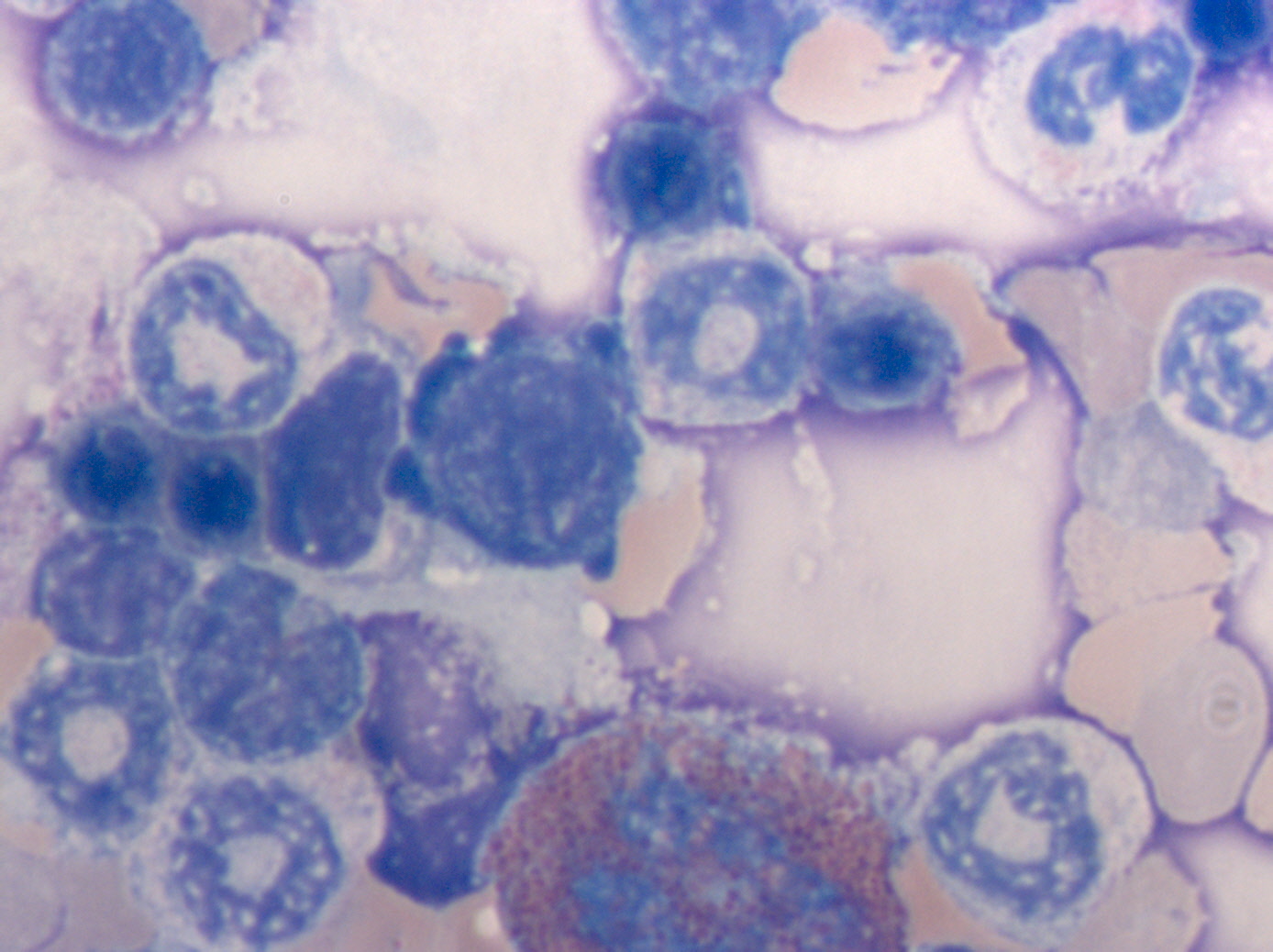

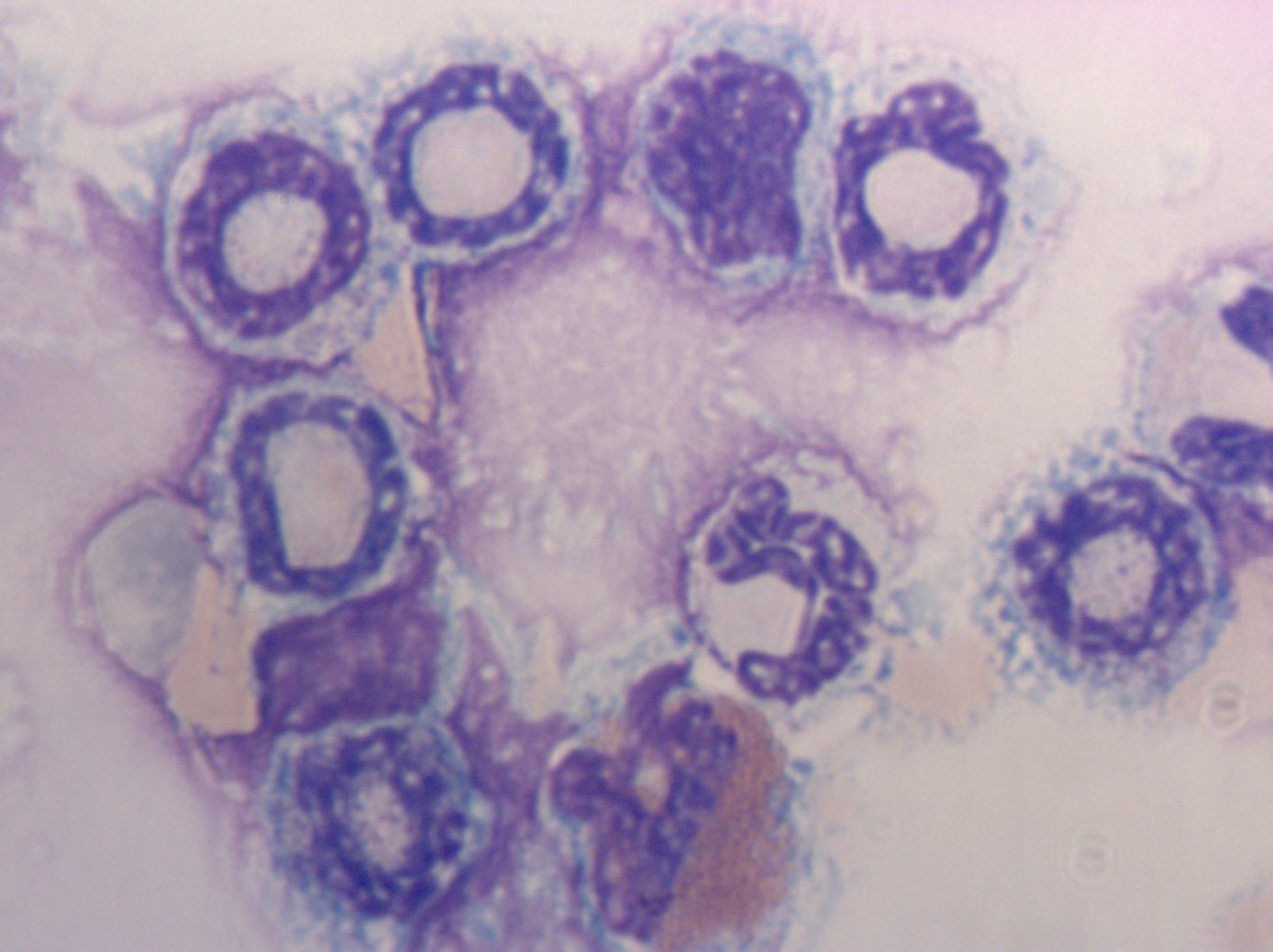

Myelogram healhy rats
The impact of various factors (drugs, ionizing radiation, toxic agents, xenobiotics, etc.) provokes not only quantitative changes in myelogram, but also qualitative changes in the structure of cells of various germs hematopoiesis. Quantitative changes can be characterized by an increase in blast cells, the proliferation of the germ and the oppression of the other, the imbalance of cell structure, or cytopenia hypercellular. Qualitative changes may be characterized by multinuclear cells, megaloblastoidnostyu, dissociation in maturation of the nucleus and cytoplasm, karioreksisom, supervision internuclear bridges, and the appearance of cells Joly Case, punktatsiey basophilic erythrocyte hypersegmentation neutrophils, lack of granules in the cytoplasm, the appearance of ring-shaped nuclei, cytoplasm vacuolization and others.
The combination of data quality and (or) quantitative manifestations myelogram may occur in various diseases, such as anemia, acute and chronic leukemias, myelodysplastic syndrome, Chediak anomaly, myelofibrosis, lymphoma, plasma cell neoplasia, and others.


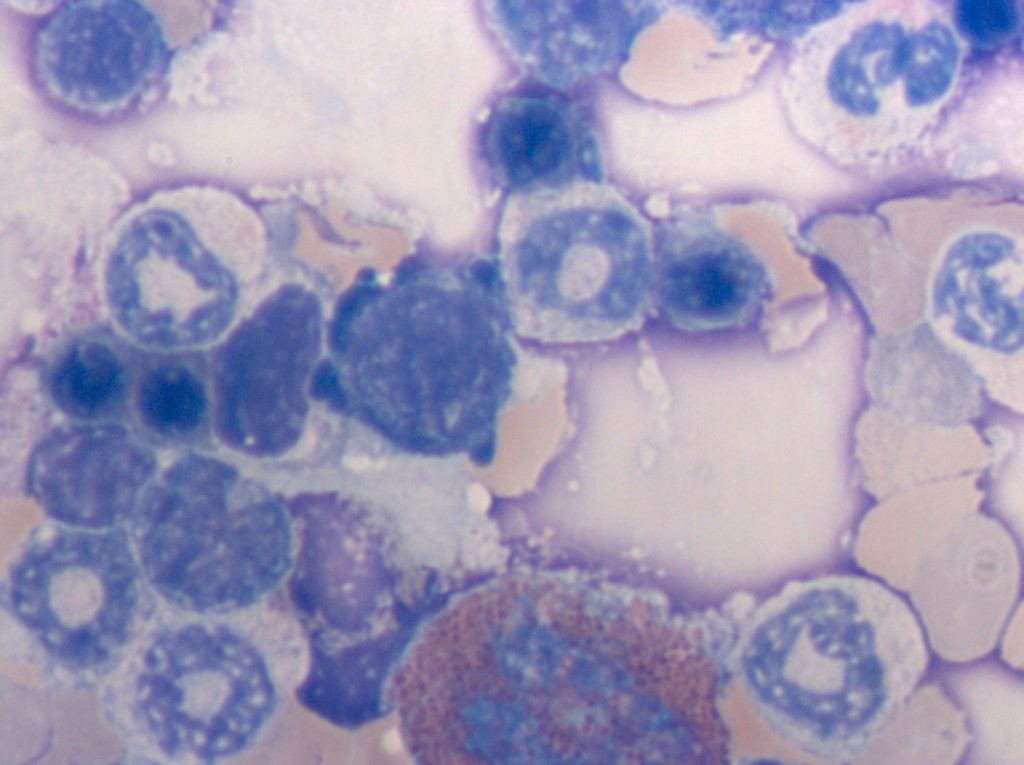
Fragment myelogram animals lymphocytic leukemia without treatment. Bone marrow hypercellular
To produce quality products using bone marrow cytological centrifuge, which allows you to create microscopic slides with a monolayer of cells.
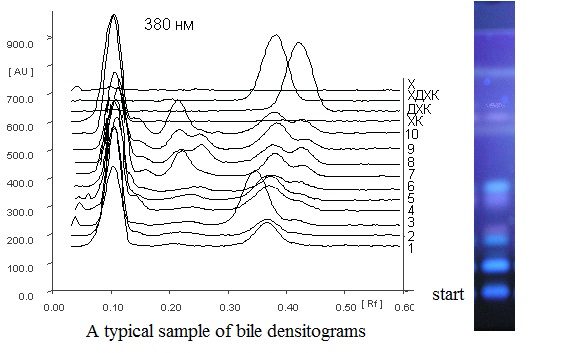
The study of qualitative and quantitative composition of bile is carried out by HPTLC (high performance thin layer chromatography). It is known that bile acids are able to form conjugates with various amino acids [Huijghebaert S.M., Hoffman A.F., 1986]. So spend the enzymatic hydrolysis of samples [Batta A.K. et al,. 1984; Batta A.K. et al., 1985].
Samples were applied to the plate, eluted dried in warm air stream. To detect bile acids and Cholesterol is carried out post chromatographic derivatization plate. Detection is performed on the scanning plate spectrodensitometer TLC Scanner 3 (Camag, Switzerland) at 380 nm and 540 nm.
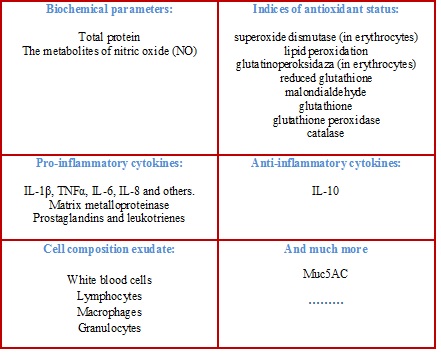
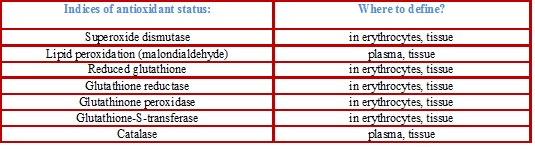
We can examine the following indicators to determine the antioxidant status:
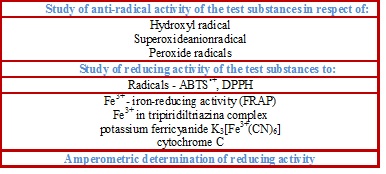
To evaluate the anti-radical and reducing activity in vitro, we use:
To determine the immunogenicity of biological products of various interferon-based laboratory staff have developed and validated method for determining the amount of antibody to human recombinant interferon alfa-2a in the blood plasma of mice by ELISA.
At your request can be developed and validated method of determining the amount of antibodies to a variety of biological preparations.
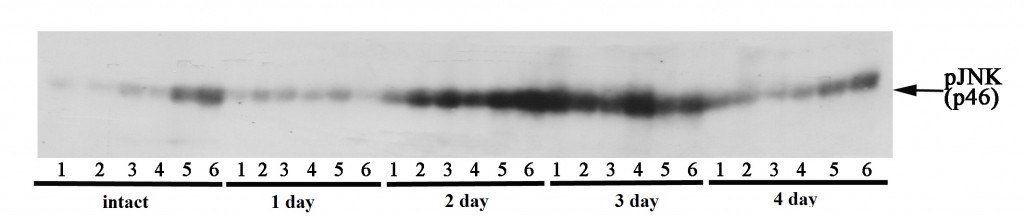
Western Blot
Scope – the study of the mechanisms of action of drugs
MAP-kinase p38, ERK1/2, JNK1/2
GТPаse: Ras, Rac, Сdc42, RhoA
nuclear factors: NF-kB, AP-1, PPARs
and etc.

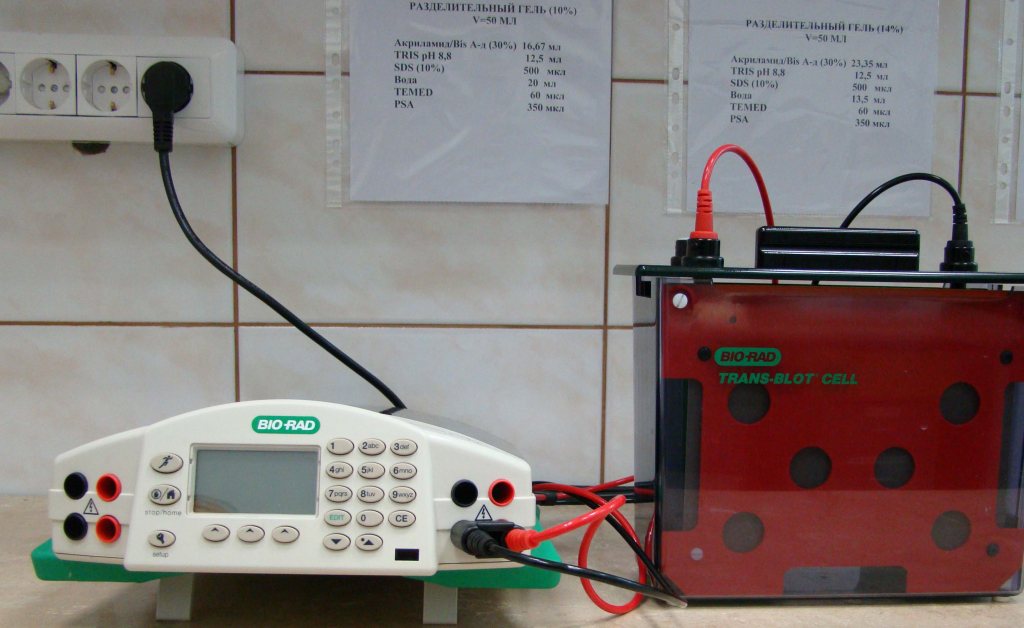
The camera for the transfer of proteins on micro-cellulose membrane
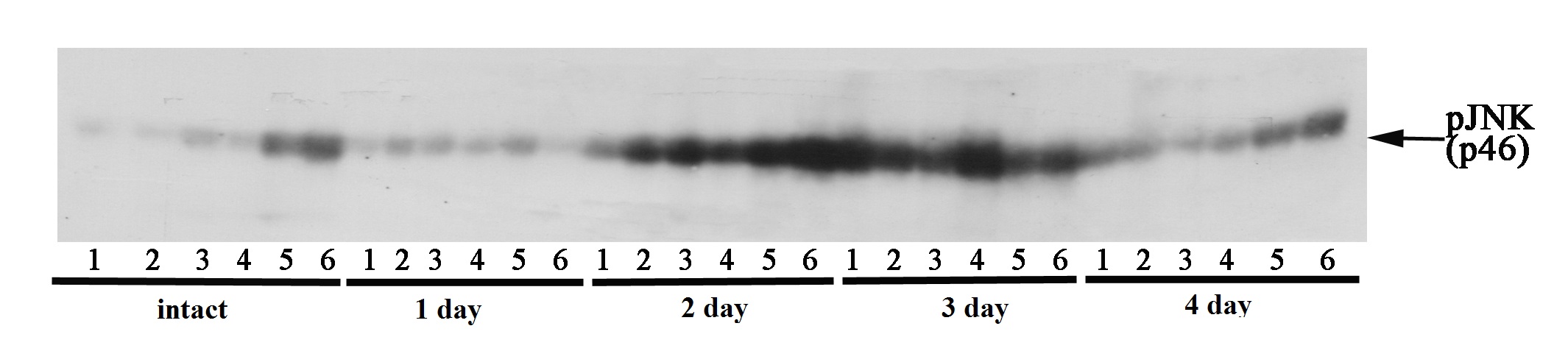
Photo micro cellulose membrane after Western Blot
Enzyme analysis
Scope – the study of the mechanisms of action of drugs (non-steroidal anti-inflammatory drugs, statins, and others.)
Dipeptidyl peptidase type 4 (DPP-4)
Сyclooxygenase type 1 and 2 (COX-1/COX-2)
lipoxygenase type 5, 12, 15 (5, 12, 15-LOX)
3-hydroxy-3-methylglutaryl-coenzyme A reductase (HMG-CoA reductase)
Angiotensin-converting enzyme and others.
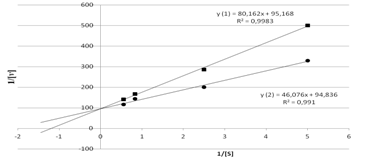
lots of the speed of the enzymatic reaction of DPP-4 in the presence of a substrate concentration of inhibitor (1) and absence (2) for rat plasma
ELISA
Scope – the study of the pharmacokinetics and mechanisms of action of drugs
IL-1β, IL-2, TNFα, IL-4, IL-6, IL-8, IL-10, IFNs и др.
Muc5AC
Matrix metalloproteinase
Prostaglandins and leukotrienes
The hormones insulin, glucagon
Estrogen, progesterone, testosterone
follicle-stimulating hormone, luteinizing hormone
and many other plasma proteins, serum exudates laboratory animals, supernatants of cell lines
Analysis cytotoxicity on cell lines. MTT-test
Scope – Toxicology
Culture of rat fibroblasts
Human lung carcinoma: A549
Cervical Carcinoma: HeLa
Monocytic leukemia: L41
Acute lymphatic leukemia: THP-1
Histiocytic lymphoma: U937
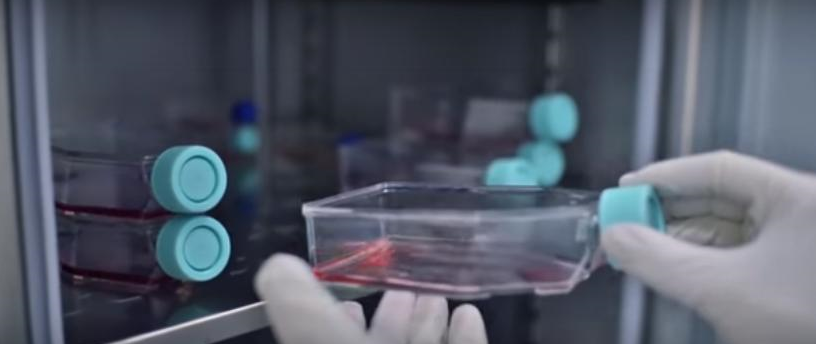
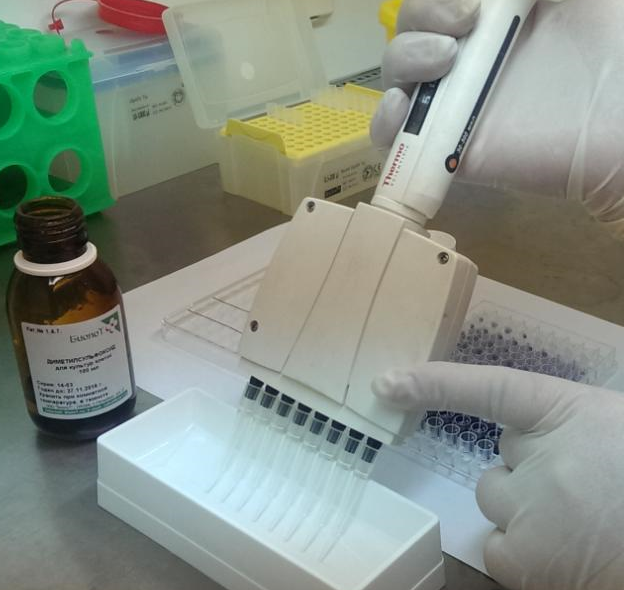
Analysis cytotoxicity on cell lines
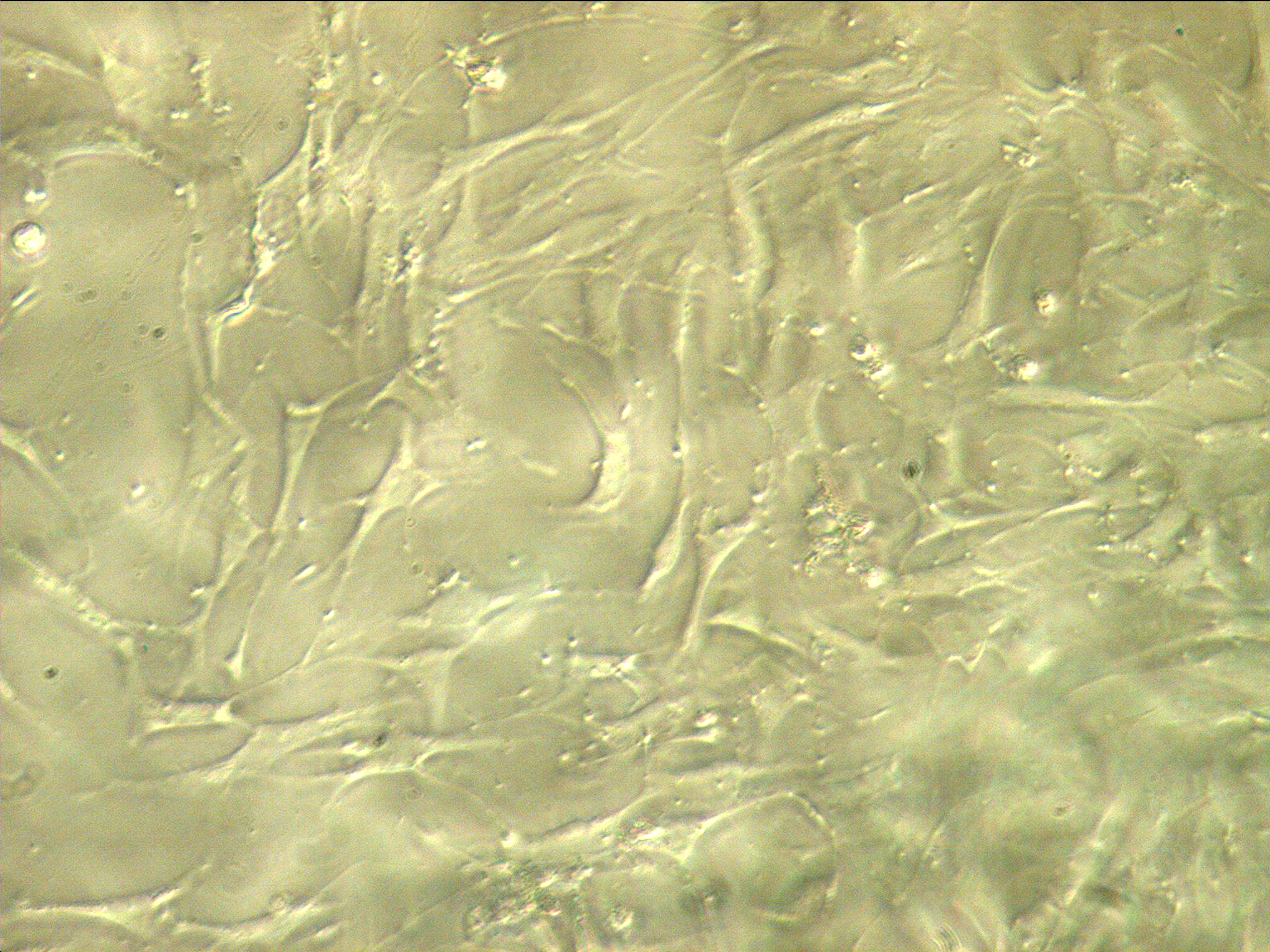
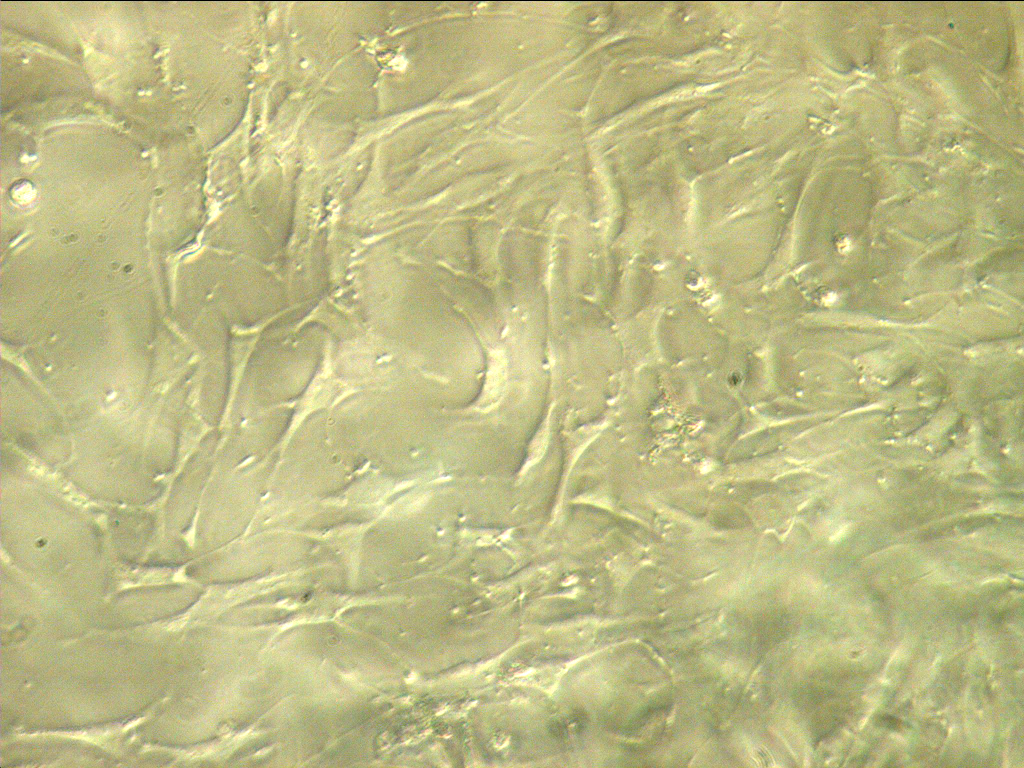
Culture fibroblasts isolated from skin of rat embryos
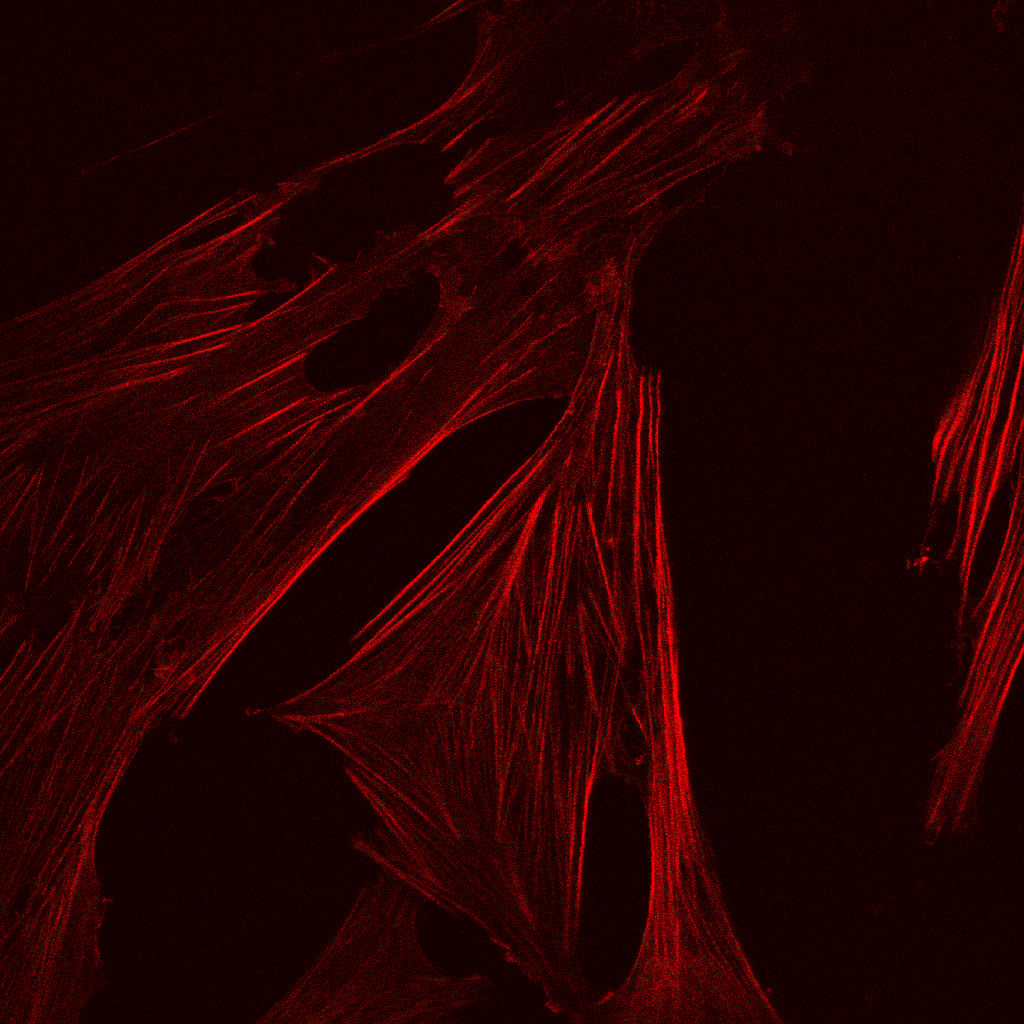
Photo of fibroblasts in the field of confocal microscopy at an excitation wavelength / absorption of 540/565 nm. The red colored fibrillary actin.

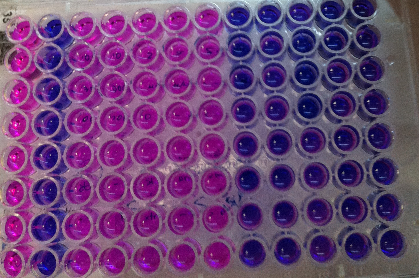
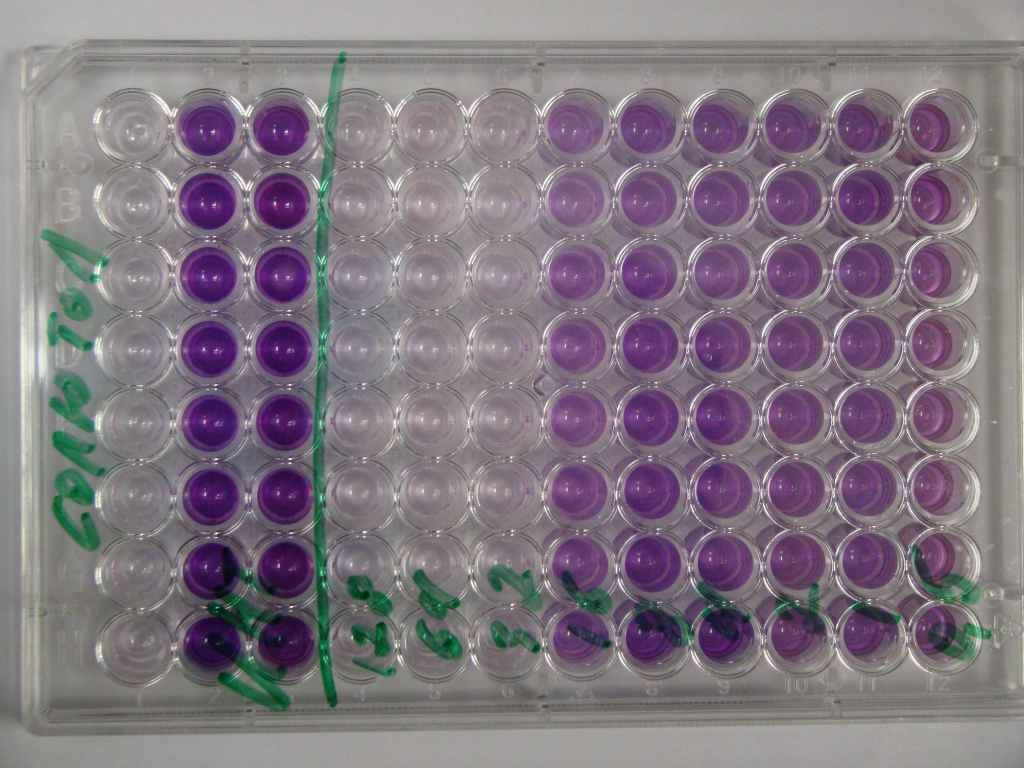
Type 96-well tissue culture plate after MTT test formulation and application of DMSO to the wells
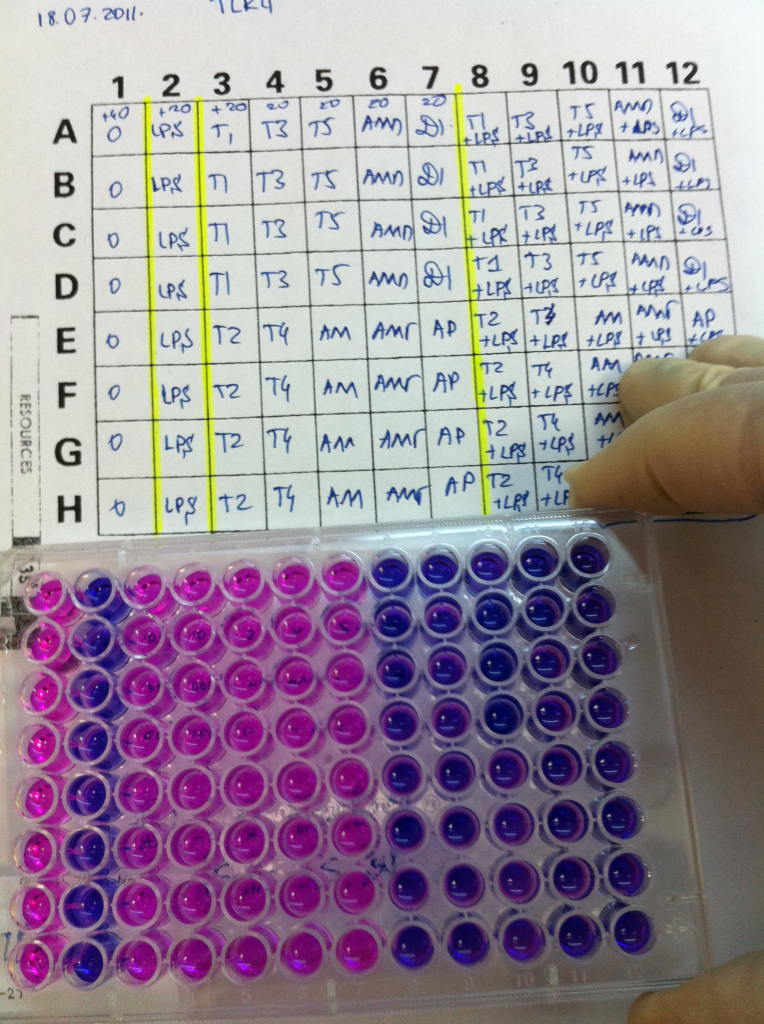
Interaction with Toll-like receptors
Scope – the study of the mechanisms of action of drugs (anti-inflammatory, antiviral) and adjuvant
TLR1/2, TLR4, TLR5, TLR6, TLR 3,7,8,9 cell lines HEK-Blue-hTLRs (InvivoGen, США)

Analysis of interaction with TLR4 cell line HEK-Blue-hTLR4 (InvivoGen, USA)
Using the platform of screening kits LanthaScreen (Thermo Fisher Scientific, USA)
Scope – the study drug mechanisms of action
RAR and RXR – retinoic acid receptors
Steroid hormone receptors (estrogen receptor, progesterone)
Nuclear receptors PPARs (peroxisome proliferator-activated receptors)
Thyroid receptor
Vitamin D receptor, and many others.
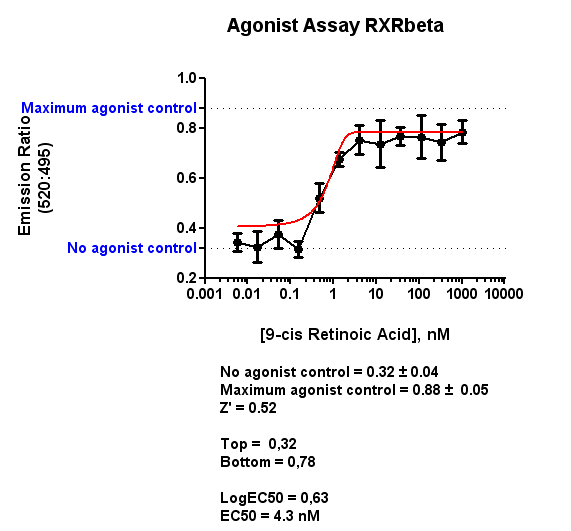
Analysis of the interaction with the retinoid X receptor beta. Positive control. 9-cis retinoic acid
Analysis of the degranulation of basophils in the rat RBL-2H3
Scope – the study of pharmacodynamics (membrane-stabilizing action of drugs), and mechanisms of action
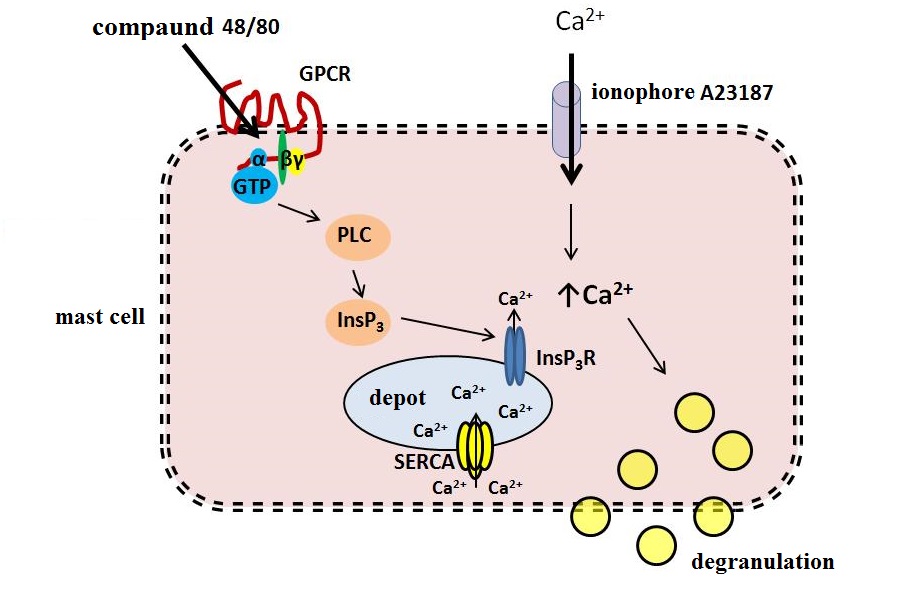
Schematic representation of the mechanism of action of the substance 48/80 and ionophore A23187 – inductors degranulation. GPCR-coupled receptors G-protein; GTP – guanazin triphosphate; PLC – phospholipase C; InsP3 – inositol triphosphate; SERCA – calcium ATPase
Analysis of peritoneal macrophage phagocytic activity by the absorption of latex particles conjugated to FITC
Scope – toxicology, study of the pharmacodynamics of drugs (immunomodulatory effect)
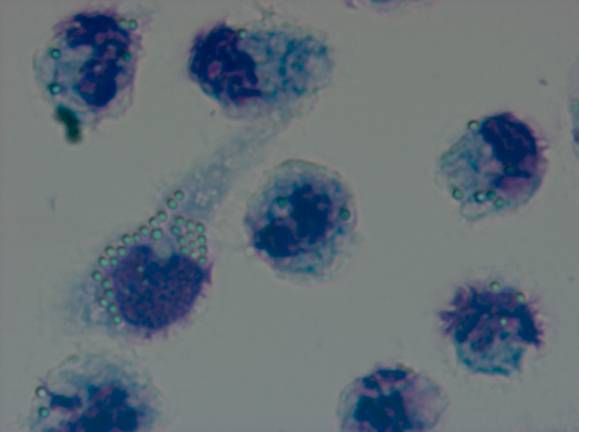 Mouse peritoneal macrophages. Absorption latex particles conjugated to the fluorescent label FITC. The transmitted light
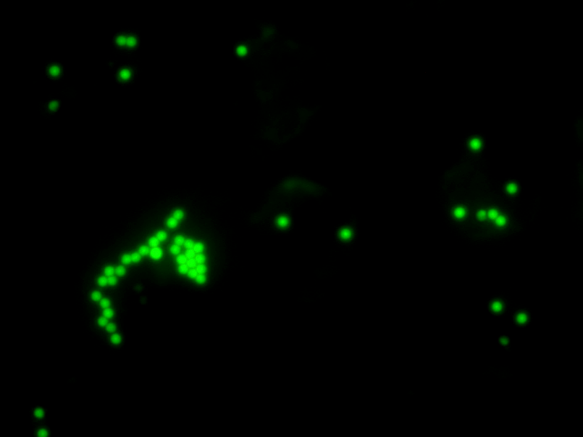
Mouse peritoneal macrophages. Absorption latex particles conjugated to the fluorescent label FITC. In fluorescence mode (absorbance 495 nm, emission 517 nm), the increase 100x
Analysis of the proliferative activity of T-and B-mouse spleen lymphocytes to incorporate BrdU label
Scope – toxicology, study of the pharmacodynamics of drugs (immunomodulatory effect)
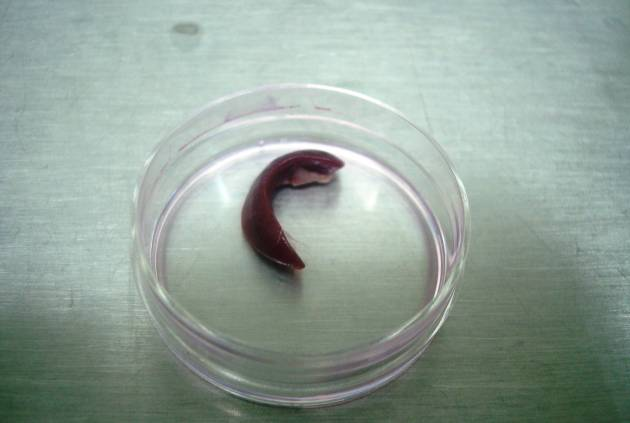
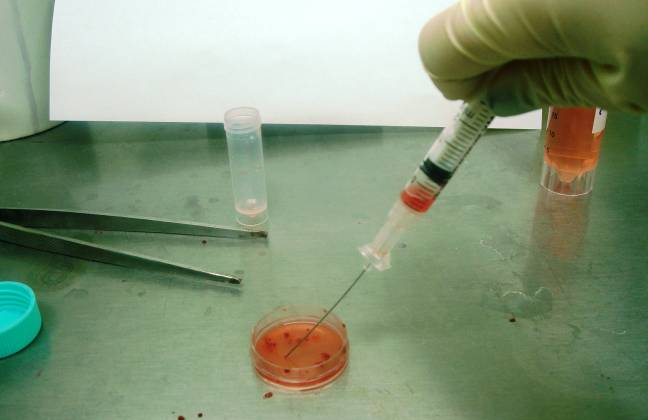
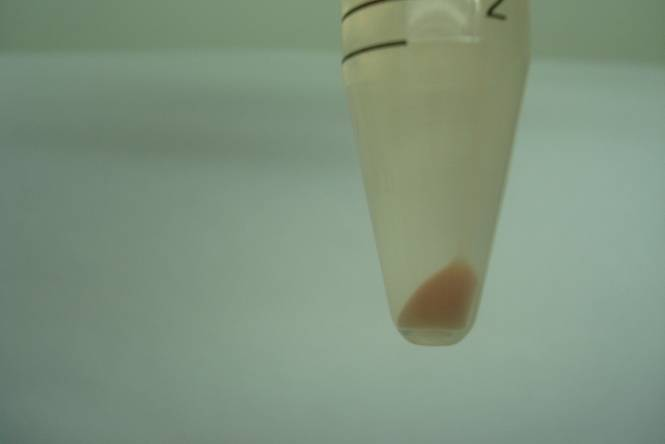
Isolation of mouse splenocytes of the spleen
DNA-comet test
Scope – the study of the mutagenicity and carcinogenicity
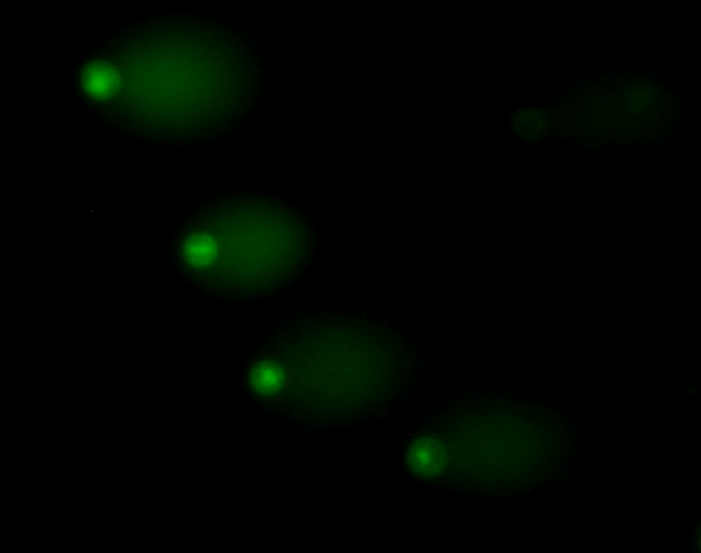
DNA-comets test conditions in vitro cell line A549. Positive control of methyl methanesulfonate 6 mkM. Painting SYBR-Green I.
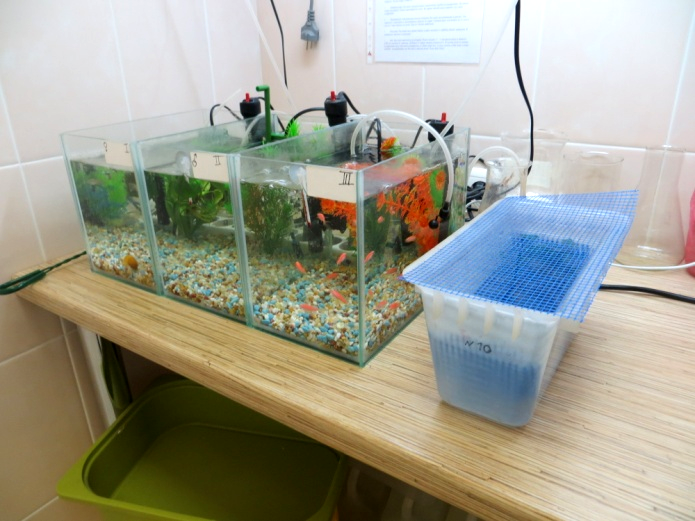
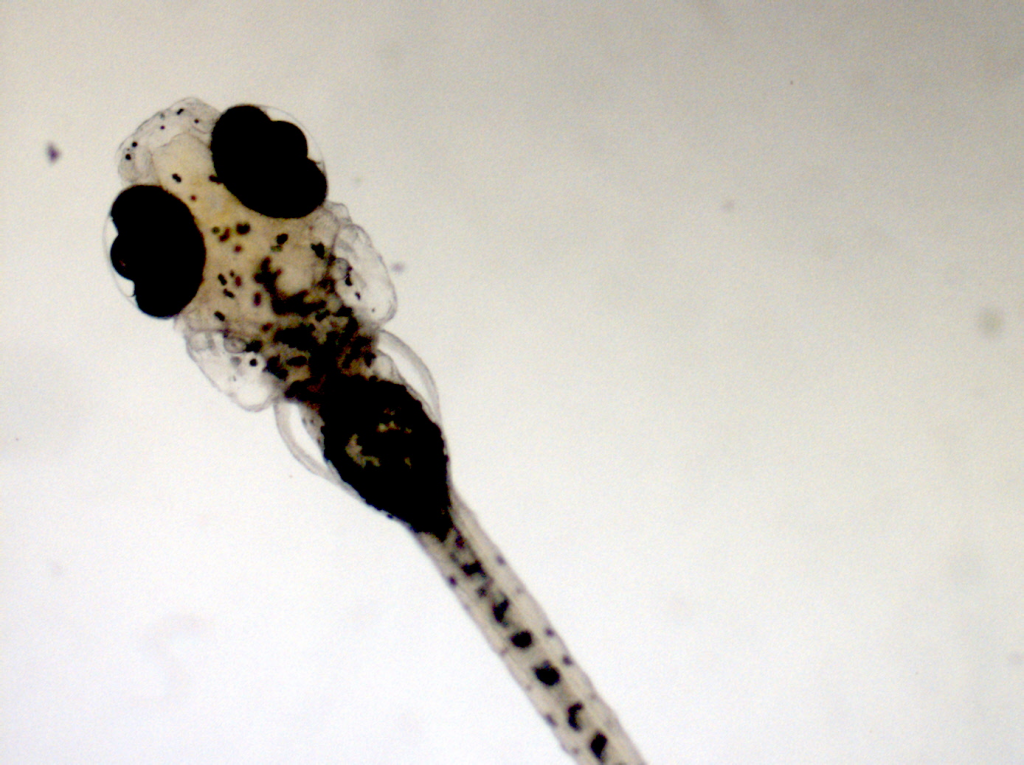
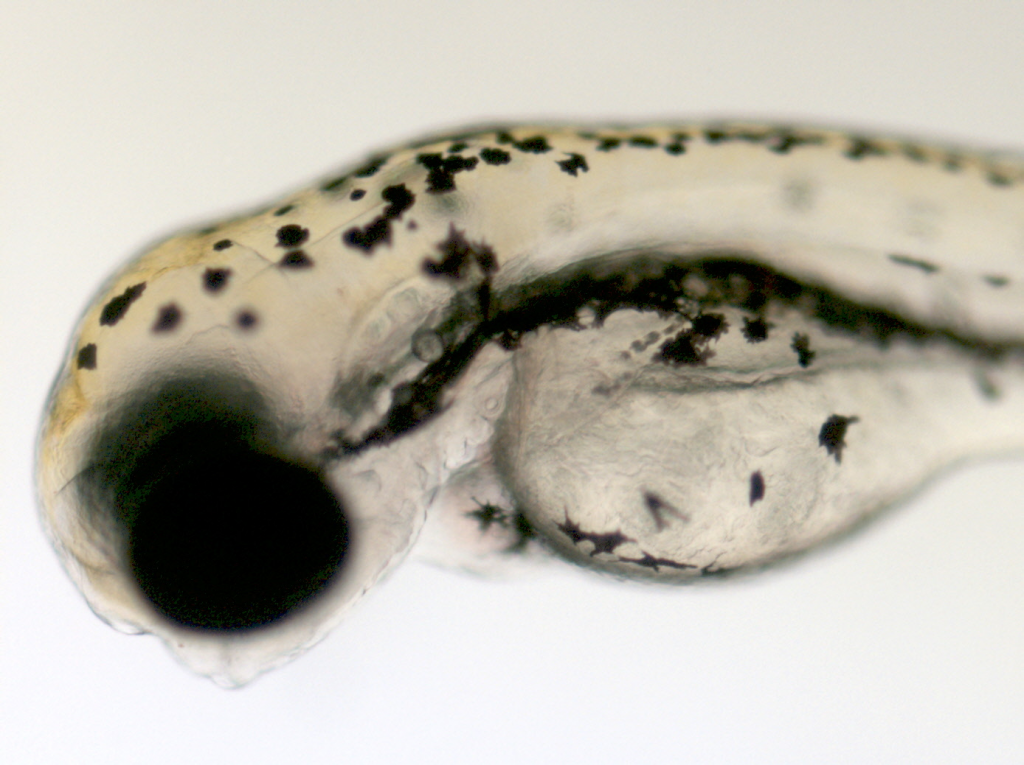
Using alternative model Danio rerio for toxicological studies
Scope – the study of toxicity, genotoxicity
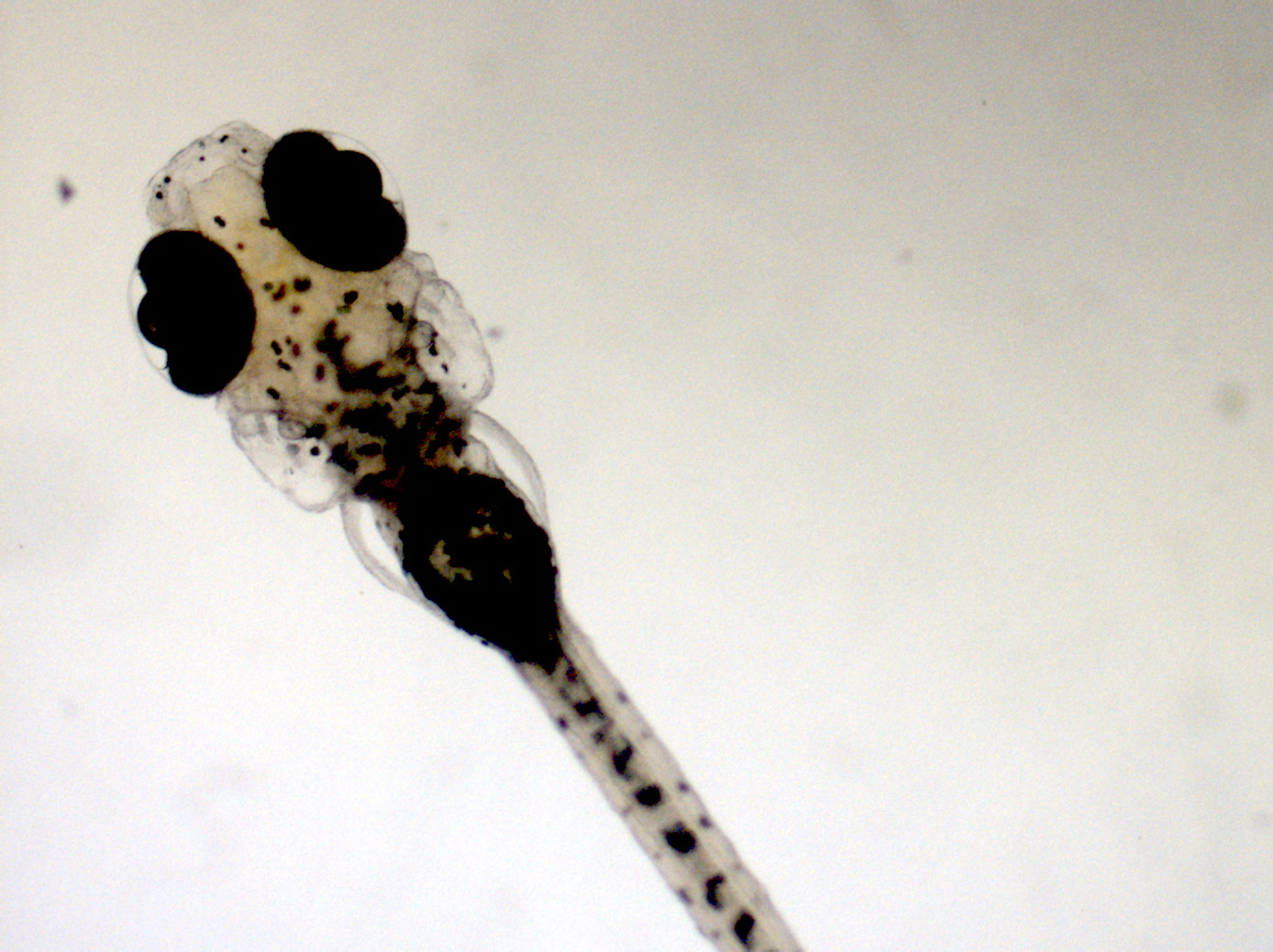
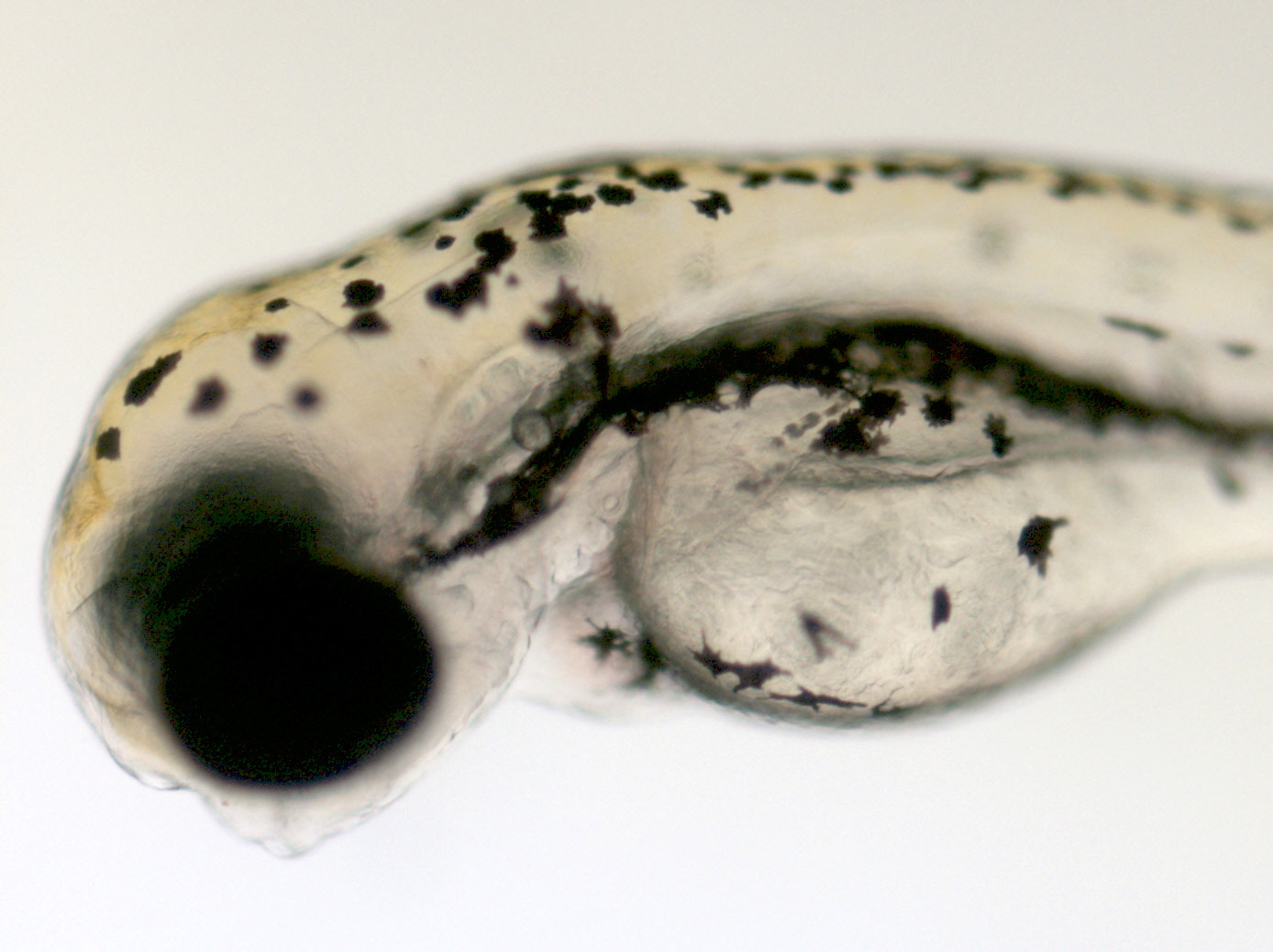
Larva Danio Rerio. 5 days
- Справочник Физиологические, биохимические и биометрические показатели нормы экспериментальных животных. Под ред.: д.м.н. Макарова В.Г., д.м.н. Макаровой М.Н. Абрашова Т.В., Гущин Я.А., Ковалева М.А., Рыбакова А.В., Селезнева А.И., Соколова А.П., Ходько С.В. СПб.: Из-во «ЛЕМА», 2013. -116 с. СПРАВОЧНИК. Физиологические, биохимические и биометрические показатели нормы экспериментальных животных
- Дадали Ю.В., Дадали В.А., Макарова М.Н. Спектрофотометрический метод оценки антиоксидантной активности натуральных продуктов и индивидуальных антиоксидантов // Вестн. БПА. Матер. науч. сессии, посвящ. памяти проф. А.С. Мозжухина. -СПб. -2001. -Вып. 40. -С. 120.
- Александрова А.Е., Макарова М.Н., Макаров В.Г., Куренкова Т.Ю. Действие Гастроромазола на перекисное окисление липидов и антиоксидантный статус в условиях экспериментального язвообразования // Актуальные проблемы создания новых лекарственных препаратов природного происхождения: Матер. VI международного съезда. –СПб. –2002. –С. 344-349.
- Макарова М.Н. Изучение антиоксидантной активности фитопрепаратов в условиях токсического гепатита // Проблемы охраны здоровья населения и окружающей среды: Тезисы науч. конференции. -СПб. -2002. -С. 178-179.
- Макарова М.Н., Александрова А.Е., Макаров В.Г., Куренкова Т.Ю. Изучение антиоксидантной активности препаратов на основе семян сосны кедровой сибирской (Semina pini sibiricae du tour) // Биохимия – медицине: Матер. международной науч. конференции. -Махачкала. -2002. -С. 223-226.
- Макарова М.Н., Александрова А.Е., Дадали В.А., Макаров В.Г. Влияние масла ромашки на состояние антиоксидантной системы при экспериментальном язвенном поражении слизистой желудка // III Съезд биохимического общества: Тезисы науч. докладов. -СПб. -2002. -С. 189-190.
- Макарова М.Н., Дадали В.А., Макаров В.Г., Зенкевич И.Г. Характеристика антирадикальной активности некоторых природных биологически активных соединений //Актуальные проблемы создания новых лекарственных препаратов природного происхождения: Матер. VI международного съезда. –СПб. –2002. –С. 441-444.
- Макарова М.Н., Кузнецов А.С., Дадали В.А. Оценка антирадикальной активности флавоноидов in vitro // Биохимия – медицине: Тезисы Всеросийской науч. конференции, посвящ 110-летию каф. клин. биохимии и лаб. диаг. ВМА и 100-летию со дня рожд. акад. АМН СССР Г.Е. Владимирова. -СПб. -2002. -С. 53.
- Макарова М.Н., Кузнецов А.С., Дадали В.А., Макаров В.Г., Зенкевич И.Г. Новый биохимический метод коррекции болезненных и патологических состояний человека на основе механизмов свободно-радикального окисления // Вестн. БПА. Матер. науч. сессии, посвящ. памяти проф. А.С. Мозжухина. -СПб. -2002. -Вып. 45. -С. 100-107.
- Макарова М.Н., Кузнецов А.С., Зенкевич И.Г., Макаров В.Г. Флуориметрический метод оценки антирадикальной активности природных антиоксидантов по отношению к гидроксильным радикалам // Актуальные проблемы создания новых лекарственных препаратов природного происхождения: Матер. VI международного съезда. –СПб. –2002. –С. 437-441.
- Макарова М.Н., Куренкова Т.Ю., Белозерова А.К., Закревский В.В., Макаров В.Г. Применение показателя антирадикальной емкости плазмы крови у больных с аднекситом // Вестн. СПбГМА им. И.И. Мечникова. -2002. -№ 1-2 (3) -С. 110-112.
- Makarova M.N., Kuznetsov A.S., Dadali V.A., Makarov V.G., Zenkevich I.G. Study of hydroxyl radical scavenging activity of polyphenolic compounds // Reactive Oxygen and Nitrogen Species: diagnostic, preventive and therapeutic values: Poster International symposium. -St.-Petersburg-Kizhi- St.-Petersburg. -2002. -C. 128.
- Makarova M.N., Kuznetsov A.S., Dadali V.A., Makarov V.G., Zenkevich I.G. The fluorimetric method for of hydroxyl radical scavenging activities of natural antioxidant // GA. Book of abstracts. Fascination facts future. August 31 – September 4. – 2003/ – Kiel, Germany. P. 101.
- Makarov V.G., Makarova M.N., Zenkevich I.G. Scavenging activity of polyphenolic compounds to hydroxyl radical // International Workshop «Progress in Biotechnology and Neurobiology – Integrative Medicine» Hurgada, Egipt, Africa, 14- 24 February 2004 P. 20-21.
- Макарова М.Н., Селезнева А.И., Макаров В.Г., Зенкевич И.Г. Изучение антирадикальной активности витаминов по отношению к гидроксильному радикалу // Материалы 2-ой межрегиональной научно- практической конференции: Питание здорового и больного человека, Санкт – Петербург. – 2004 г. С. 141-142.
- Макарова М.Н., Селезнева А.И., Макаров В.Г., Зенкевич И.Г. Изучение антирадикальной активности витаминов // Новые технологии в медицине: Сб. докл. Первой международной дистационной науч.- практ. конференции, 15 – 30 марта 2004 года. – СПб., 2004 г. С. 101.
- Макарова М.Н., Селезнева А.И., Макаров В.Г., Зенкевич И.Г. Оценка антирадикальной активности водо- и жирорастворимых витаминов по отношению к гидроксильному радикалу // Проблемы укрепления здоровья и профилактика заболеваний/ Под ред. акад. РАМН А.В. Шаброва, проф. В.Г. Маймулова. – СПб.:СПбГМА им. И.И. Мечникова – 2004 г. С.172-173.
- Макарова М.Н., Макаров В.Г., Зенкевич И.Г. Антирадикальная активность флавоноидов и их комбинации с другими антиоксидантами // Фармация. -2004, № 2. –С. 30-32.
- Makarov V.G., Makarova M.N., Alexandrova A.E., Ryzhenkov V.E The role of antioxidant system in gastroprotective action of camomille (Matricaria vrecutita L.) oil extract in stress – induced stomach mucous ulceration // Психофармакология и биологическая наркология. – 2004. № 2-3 С. 706 – 707.
- Макарова М.Н., Макаров В.Г., Станкевич Н.М., Ермаков С.Б., Яшакина И.А. Характеристика антирадикальной активности и состава экстрактов из растительного сырья //Актуальные проблемы создания новых лекарственных препаратов природного происхождения – Фитофарм. – 2004, 21-23 июня: Матер. VIII международного съезда. – Миккели, Финляндия. – 2004. С. 464-470.
- Александрова А.Е., Макаров В.Г., Рыженков В.Е., Макарова М.Н., Шиков А.Н. Противовоспалительная активность и механизм действия нового комплексного растительного средства //Актуальные проблемы создания новых лекарственных препаратов природного происхождения – Фитофарм. – 2004, 21-23 июня: Матер. VIII международного съезда. – Миккели, Финляндия. – 2004. С.345-352.
- Макаров В.Г., Макарова М.Н. Антиоксиданты и реакционно-активные формы кислорода. Их роль и механизм действия // Актуальные проблемы создания новых лекарственных препаратов природного происхождения – Фитофарм. – 2004, 21-23 июня: Матер. VIII международного съезда. – Миккели, Финляндия. – 2004. С.121-132.
- Макаров В.Г., Макарова М.Н., Селезнева А.И. Антирадикальная активность витаминов по отношению к гидроксильному радикалу и супероксидному радикалу // Клиническая фармакология в России: достижения и перспективы. 9-10 сентября 2004. Матер. Научно-практич. конференции с международным участием. – Москва. – 2004. С.138-140.
- Александрова А.Е., Макарова М.Н. Антигипоксическая и антиоксидантная активность синтетических и природных препаратов // Клиническая фармакология в России: достижения и перспективы. 9-10 сентября 2004. Матер. Научно-практич. конференции с международным участием. – Москва. – 2004. С. 5-9.
- Макаров В.Г., Макарова М.Н., Селезнева А.И. Сравнительная оценка антирадикальной активности флавоноидов по отношению к гидроксильным и супероксиданион радикалам в экспериментах in vitro // Вестн. СПбГМА им. И.И. Мечникова. -2004. – № 4. -С. 108-110.
- Макаров В.Г., Макарова М.Н., Селезнева А.И. Сравнительная оценка антирадикальной активности флавоноидов // Человек и его здоровье. -2005. сборник посвящен 60- летию Победы в Великой Отечественной войне: / Под редакцией акад. РАМН А.В. Шаброва, проф. В.Г. Маймулова/ -СПб: ГМА им. И.И. Мечникова. -2005. С.166
- Макаров В.Г., Макарова М.Н., Селезнева А.И. Изучение механизма антиоксидантного действия витаминов и флавоноидов // Вопросы питания. -2005. –Т. 74, №1. –С. 10-13
- Макарова М.Н., Макаров В.Г., Станкевич Н.М., Ермаков С.Б., Яшакина И.А. Характеристика антирадикальной активности экстрактов из растительного сырья и содержание в них дубильных веществ и флавоноидов. // Растительные ресурсы. -2005, вып. 2. –С. 106-115.
- Makarova M.N., Selezneva A.I. Activity of flavonoids in lipid peroxidation reactions // Актуальные проблемы создания новых лекарственных препаратов природного происхождения – Фитофарм. – 2005, 22-25 июня: Матер. IX международного съезда. – Санкт-Петербург, Россия. – 2005. С. 808.
- Макарова М.Н., Макаров В.Г. Обзор методов оценки антирадикальной активности природных соединений // Актуальные проблемы создания новых лекарственных препаратов природного происхождения – Фитофарм. – 2005, 22-25 июня: Матер. IX международного съезда. – Санкт-Петербург, Россия. – 2005. С.102-116
- Макарова М.Н., Макаров В.Г., Александрова А.Е., Селезнева А.И. Тесакова С.В. Изучение антиоксидантной и антигипоксической активности экстрактов бадана тостолистного // Актуальные проблемы создания новых лекарственных препаратов природного происхождения – Фитофарм. – 2005, 22-25 июня: Матер. IX международного съезда. – Санкт-Петербург, Россия. – 2005. С.94-102.
- Макарова М.Н., Александрова А.Е., Макаров В.Г., Селезнева А.И. Тесакова С.В. Оценка антиоксидантных и антигипоксических свойств экстрактов бадана // Гипоксия: механизмы, адаптация коррекция. Материалы Четвертой Российской конференции 12-14 октября 2005., Москва. С.73.
- Makarova M.N., Zhorina A.S., Selezneva A.I. The study of antioxidant properties of some plant compounds/flavonoids in system with generation of superoxide and peroxil radicals // Актуальные проблемы создания новых лекарственных препаратов природного происхождения – Фитофарм. – 2006, 27-30 июня: Матер. X международного съезда. – Санкт-Петербург, Россия. – 2006. С.548-549.
- Makarova M.N.,Tesakova S.V., Eshenko A.Yu.,Siivari J., Galambosi B., Zenkevich I.G. Study of antiradical activity of Bergenia ssp. Leave samples in vitro // Актуальные проблемы создания новых лекарственных препаратов природного происхождения – Фитофарм. – 2006, 27-30 июня: Матер. X международного съезда. – Санкт-Петербург, Россия. – 2006. С. 488-493
- Makarova M.N., Makarov V.G., Selezneva A.I. Anti-and prooxidant effect of flavonoids and their regulatory role in cell function // VIII World Congress: International society for adaptive medicine (ISAM). Moscow, Russia, June 21-24, 2006. P.179.
- Tikchonov V.P., Ridlovskaa A.V., Makarova M.N., Makarov V.G Investigation of anti- inflammatory activity of complex herbal oil extract in vitro and in vivo // GA. 54th Annual Congress on Medicinal Plant research. 2- august – 2 september 2006, Helsinki. Finland. Planta Medica.-2006. – Vol.72, № 11. P.107.
- Жорина А.С., Селезнева А.И., Макарова М.Н., Макаров В.Г. Про – и антиоксидантные свойства биоантиоксидантов в модельных условиях // Биоантиоксидант. VII Международная конференция. 25-26 октября 2006 г., Москва. – М.: Из-во РУДН, 2006. С. 130-132.
- Makarova M.N., Pozharitskaya О.N., Shikov A.N., Rydlovskaya A.V., Makarov V.G. Fractions from Vaccinium myrtillus L. fruits in combinations with carotenoids: Study of free radical scavenger properties in vitro // Oxygen Club of California. 2006. Oxidants and antioxidants in biology. Book of abstracts. 15-18 march 2006. Santa barbara California. P. 87.
- Rydlovskaya A.V., Makarov V.G., Makarova M.N., Tikchonov V.P. Investigation of anti- inflammatory activity of complex herbal oil extract in vitro and in vivo // Oxygen Club of California. 2006. Oxidants and antioxidants in biology. Book of abstracts. 15-18 march 2006. Santa barbara California. P.107
- Tikchonov V.P. Rydlovskaya A.V., Makarov V.G., Makarova M.N., Pozharitskaya О.N. Investigation of anti- inflammatory activity of complex herbal oil extract in vitro and in vivo // Abstracts 54 th annual congres on medicinal plant research. 29 august-2 september 2006 // Planta Medica.-2006. – Vol.72 P.1007-1008.
- Макаров В.Г., Макарова М.Н., Смирнов Л.Д., Буданов С.В., Пахомов В.П., Демченкова Е.Ю., Онацкий Н.М. Методические указания по изучению антиоксидантной активности фармакологических веществ // Ведомости НЦ ЭСМП. -2007, № 2. –С. 96-103.
- Zhorina A.S., Makarova M.N. Experimental study of reducing activity of cytochrpome-c // Fhytopharm. 2007. 11 th International congress. Book of abstracts. Leiden. Netherlands. 27-30 June 2007. P.156.
- Зенкевич И.Г., Ищенко Е.В., Макаров В.Г., Макарова М.Н., Селезнева А.И. Новые примеры участия кислорода воздуха в химических реакциях в растворах // Журнал общей химии. -2008. –Т. 78, вып. 9. –С. 1449-1456.
- Abrashova T.V., Sokolova A.P., Avdeeva O.I., Karachinskaya I.V. Effects of two different medicinal forms of ascorbic acid on urine samples composition // Fhytopharm. 2009. 13 th International congress. Book of abstracts. Leiden. Netherlands. 29-31 July 2009. P. 77
- Guseva S.I., Shikov A.N., Pozharitskaya O.N., Krishen K.L., Makarov V.G., Makarova M.N. Anti-inflammatory effect of tablets with Salvia extract using carrageenan air pouch model // Book of abstracts of the 57 th Interregional Congress and Annual Meeting of the Society for Medicinal Plant and Natural Product Research. August 16-20, 2009, Geneva. Switzerland, 2009 P.7
- Крышень К.Л., Гусева С.И., Тесакова С.В., Ацапкина А.А., Макарова М.Н., Шиков А.Н., Макаров В.Г., Дьячук Г.И. Оценка противовоспалительного действия лекарственных препаратов на основе шалфея // Цитокины и воспаление 2009. Т.8, № 4. С.67-72.
- Макарова М.Н., Макаров В.Г. Молекулярная биология флавоноидов (Химия, биохимия, фармакология). Руководство для врачей // СПб., СПб., из-во «Лема» 2010 г. С. 428.
- Абрашова Т.В., Соколова А.П., Селезнева А.И., Хуттунен О.Э., Макарова М.Н., Макаров В.Г. Вариабельность биохимических и гематологических показателей у лабораторных крыс в зависимости от линии возраста // Международный вестник ветеринарии. – 2010, №2 С.55-60.
- Соколова А.П., Абрашова Т.В., Хуттунен О.Э., Селезнева А.И., Макарова М.Н., Макаров В.Г. Сравнительная характеристика биохимических и гематологических показателей у лабораторных крыс разных линий и возрастов // Международный вестник ветеринарии. – 2010, №2 С.58-62.
- Крышень К.Л., Дадали В.А., Бейшебаева Ч.Р., Павлова Р.Н., Смертина М.Н., Макарова М.Н., Карякина Л.А. Исследование взаимодействия диаллилдисульфида и омегалицина с ретиноидными рецепторами // Hi-Tech. Сборник статей под ред. А.П. Кудинова, Том 4, Санкт-Петербург, 2011 С.224-225.
- Kryshen K.L., Atsapkina A.A., Akulova E.G., Rynchukovsky M.S., Makarova M.N., Pozharitskaya O.N., Shikov A.N., Makarov V.G., Dadali V.A. Anti-inflammatory effects of two peat distillates on the model of carrageenan air pouch in the rat. // Fhytopharm. 2011. 15th International congress. Book of abstracts. Nuremberg.Germany 25-27 July 2011. P.70-71
- Obukhova V.V., Ivanova S.A., Makarova M.N., Khodko S.V. An investigation of the herbal mixtures influence on the bile composition in a rabbit experimental atherosclerosis model // Fhytopharm. 2011. 15th International congress. Book of abstracts. Nuremberg.Germany 25-27 July 2011. P.80-81
- Obukhova V.V., Selezneva A.I., Makarova M.N., Khodko S.V. An investigation of the anti-oxidant activity of herbal mixtures on an experimental hyperlipidemia model in wistar rats // Fhytopharm. 2011. 15th International congress. Book of abstracts. Nuremberg.Germany 25-27 July 2011. P.81-82
- Крышень К.Л., Демченко Д.В., Рыбакова А.В., Дадали В.А., Рыдловская А.В., Пожарицкая О.Н., Макарова М.Н., Шиков А.Н., Макаров В.Г. Оценка противоаллергенных свойств нового полипептидного препарата из печени тресковых // Экспериментальная и клиническая дерматокосметология. -2012, № 2. –С. 38-42.
- Kryshen K.L., Demchenko D.V., Ribakova A.V., Rydlovskaya A.V., Atsapkina A.A, Beketova D.V., Pozharitskaya O.N, Makarova M.N., Dadali V.A., Makarov V.G Biochemical basis of antiiflamatory properties of peptide complex obtained from the cod liver (Cadidae) // Abstracts. Phitopharm. 2012. Obzory po klinicheskoj farmacologii i lekarstvennoj terapii. -2012. –Vol. 10, № 2. –M73.
- Ковалева М.А., Селезнева А.И., Макарова М.Н., Иванова С.А., Пожарицкая О.Н. Экспериментальная оценка гипогликемической и антиоксидантной активности препаратов на основе природных хинонов // Материалы IV съезда фармакологов России «Инновации в современной фармакологии». 18-21 сентября 2012 г., республика Татарстан, г. Казань. –М.: 2012. –С. 89.
- Крышень К.Л., Ацапкина А.А., Рыбакова А.В., Демченко Д.В., Рыдловская А.В., Пожарицкая О.Н., Макарова М.Н., Макаров В.Г. Двойной селективный ингибитор циклооксигеназы-2 и 5-липооксигеназы природного происхождения // Материалы IV съезда фармакологов России «Инновации в современной фармакологии». 18-21 сентября 2012 г., республика Татарстан, г. Казань. –М.: 2012. –С. 105.
- Селезнева А.И., Макаров В.Г., Дьячук Г.И., Забозлаев А.А., Макарова М.Н., Ходько С.В., Ковалева М.А. Противоишемические свойства нового антиоксидантного препарата Валеокор-Q10 (экспериментальное исследование) // Материалы IV съезда фармакологов России «Инновации в современной фармакологии». 18-21 сентября 2012 г., республика Татарстан, г. Казань. –М.: 2012. –С. 168.
- Крышень К.Л., Рыбакова А.В., Рыдловская А.В., Макарова М.Н., Дадали В.А., Макаров В.Г. Биохимические основы противовоспалительного действия нового полипептидного комплекса, полученного из печени трески // Материалы всероссийской молодежной конференции «Фармакологическая коррекция процессов жизнедеятельности. Доклинические и клинические исследования новых лекарственных препаратов» г. Уфа, 8-10 июля 2012 г. – С. 92-94.
- Ковалева М.А., Макарова М.Н., Иванова С.А. Изучение сахароснижающего и антиоксидантного действия комплекса полигидроксинафтохиноновых пигментов из панциря морских ежей на модели экспериментального стрептозотоцин-индуцированного диабета // Современные проблемы медицинских и фармацевтических наук: Сборник материалов международной научно-практической конференции. –Днепропетровск: Организация научных медицинских достижений «Salutem», 2012. –С. 42-44.
- Kovaleva M.A., Kokareva M.N., Makarova M.N., Pozharitskaya O.N., Makarov V.G. Antioxidant activity of the green sea urchin (Strongylocentrotus drobachiensis) gonads extract on the model of streptozotocin (STZ)-diabetic mice // The 17th international congress. Phytophrm, 2013. Vienna, Austria, 8-10 July 2013. Обзоры по клинической фармакологии и лекарственной терапии. –Т. 11. –С. 56.
- Патент RU 2488402 C1 Авторы: Иванова С.А., Пожарицкая О.Н., Шиков А.Н., Макарова М.Н., Макаров В.Г. Средство, обладающее противовоспалительным и противоаллергическим действием. Опубликовано 27.07.2013. Бюл. № 21.
- Патент RU 2493861 C1 Авторы: Пожарицкая О.Н., Демченко Д.В., Шиков А.Н., Макарова М.Н., Макаров В.Г. Биологически активный комплекс, обладающий противоаллергическим действием. Опубликовано 27.09.2013. Бюл. № 7.
- Ковалева М.А., Иванова С.А., Макарова М.Н., Пожарицкая О.Н., Шиков А.Н., Макаров В.Г. Влияние комплексного препарата из панциря морских ежей на концентрацию глюкозы в крови и параметры окислительного стресса на модели сахарного диабета II типа / М.А. Ковалева [и др.] // Экспериментальная и клиническая фармакология. – 2013. – Т. 76, № 8. – С. 27-30.
- Pozharitskaya O.N., Shikov A.N., Makarova M.N., Ivanova S.A., Kosman V.M., Makarov V.G., Bazgier V., Berka K., Otyepka M., Ulrichova J. Antiallergic effects of pigments isolated from Green sea urchin (Strongylocentrotus droebachiensis) shells // Planta Med. -2013. –Vol. 79. –P. 1698-1704.
- Крышень К.Л., Демченко Д.В., Шиков А.Н., Пожарицкая О.Н., Макарова М.Н., Макаров В.Г. К механизму противовоспалительного действия комплекса, выделенного из печени трески. Антиэкссудативное действие. (Сообщение 1). // Международный вестник ветеринарии. -2013, №4. –С. 100-105. К механизму противовоспалительного действия комплекса, выделенного из печени трески. Антиэкссудативное действие
- Крышень К.Л., Фаустова Н.М., Пожарицкая О.Н., Шиков А.Н., Макарова М.Н., Макаров В.Г. Механизм противовоспалительного действия комплекса, выделенного из печени трески. Ингибирование ЦОГ-2 и 5-ЛОГ. Сообщение №2. // Международный вестник ветеринарии. -2014, №1. –С. 80-84. Механизм противовоспалительного действия комплекса, выделенного из печени трески. Ингибирование ЦОГ-2 и 5-ЛОГ
- Кашкин В.А., Соколова А.В., Абрашова Т.В., Макарова М.Н., Макаров В.Г. Особенности гемостаза у крыс// Международный вестник ветеринарии. -2013, №4. –С. 88-93. Особенности состояния гемостаза у крыс
- Облучинская Е.Д., Макарова М.Н., Пожарицкая О.Н., Шиков А.Н. Влияние ультразвуковой обработки на химический состав и антикоагулянтные свойства сухого экстракта фикуса // Химико-фармацевтический журнал. -2015. –Т. 49, № 3. –С. 61-64.
- Pozharitskaya O.N., Shikov A.N., Kosman V.M., Selezneva A.I., Urakova I.N., Маkarova M.N., Makarov V.G. Immunomodulatory and antioxidants properties of fixed combination of fish oil with plant extracts // Synergy. -2015. №2. –P. 19-24.
- Obluchinskaya E.D., Маkarova M.N., Pozharitskaya O.N., Shikov A.N. Effects of ultrasound treatment on the chemical composition and anticoagulant properties of dry Fucus extract // Pharmaceutical Chemistry Jornal. -2015. –Vol. 49, № 3. –P. 183-186.
- Фаустова Н.М., Ушакова Н.В., Макарова М.Н., Макаров В.Г. Особенности ферментного спектра пищеварительного тракта лабораторных животных и человека // Международный вестник ветеринарии. -2016, № 2. –С. 125-146.Особенности ферментного спектра пищев. тракта лаб. животных и человека
- Горячева М.А., Крышень К.Л., Кательникова А.Е., Акулова Е.Г., Макарова М.Н., Макаров В.Г. Методические аспекты использования базофилов крысы линии RBL-2H3 для изучения дегрануляции // Молекулярная медицина.– 2016. –Т. 14, № 3. – С.48-52.
- Faustova N.M., Kosman V.M., Pozharitskaya O.N. Preliminary study of chemical composition and dipeptidyl peptidase IV inhibitory activity of various extracts of Larix sibirica in vitro Abstracts. Phitopharm. 2016. Obzory po klinicheskoj farmacologii i lekarstvennoj terapii. – 2016. – Vol. 14. – P. 17-18.PRELIMINARY STUDY OF CHEMICAL COMPOSITION AND DIPEPTIDYL PEPTIDASE IV INHIBITORY ACTIVITY OF VARIOUS EXTRACTS OF LARIX SIBIRICA IN VITRO
- Косман В.М., Крышен ьК.Л., Крышень А.А., Гаврилин М.В., Пожарицкая О.Н., Макарова М.Н. Валидация теста «Аномальная токсичность» для стандартизации субстанции инсулина // Разработка и регистрация лекарственных средств. – 2016, № 3. – С. 138-144.
- Voitenko N.G., Makarova M.N., Kovaleva M.A. Variability of blood biochemical parameters and establishment of reference intervals in preclinical studies. Part 2: rabbit. Laboratory Animals for Science. – 2020, №2. https://doi.org/10.29296/2618723X-2020-02-01 Abstract. The data of the biochemical analysis are the reference for most of the preclinical studies. The establishment and revision of reference ranges of biochemical indicators for all types of used laboratory animals is an important task for each testing center. In the Russian Federation, rabbits are widely used for various studies, for example, the study of the general toxic properties of original drugs, or long-acting drugs, the study of the specific activity of drugs used for the treatment of the visual organs and the musculoskeletal system, etc. Despite the sufficient study of the species as a whole, Russian periodicals present a limited amount of data on the reference intervals of biochemical indicators. Our test center has accumulated a data bank of such indicators that were determined in multiple-dose toxicity studies, which allowed us to conduct a retrospective analysis and review the available reference intervals. The calculation was based on observation data obtained in the period from January 2018 to December 2019. The determination of biochemical parameters in this period of time was carried out on the same equipment using the same methods. A retrospective analysis of the data was performed on 13 biochemical parameters of blood serum of three breeds of rabbits – New Zealand, chinchilla, white giant. The sample consisted of 127 females and 127 males, the age of the animals in the studies was 16-25 weeks (the weight of the animals was 3-5 kg). The article presents reference intervals for creatinine, urea, aspartate aminotransferase, alanine aminotransferase, alkaline phosphatase, cholesterol, triglycerides, total protein, albumin, globulin, glucose, total bilirubin, and the albumin/globulin ratio. The necessity of creating intra-laboratory databases of reference intervals in each test center is justified. Interindividual variability was calculated for the specified biochemical parameters. The greatest inter-individual variability (more than 30%) was found for such indicators as alkaline phosphatase, triglycerides, cholesterol and total bilirubin. The use of retrospective data analysis allows us to implement the principles of 3Rs and get more correct data on a larger sample of laboratory animals. The analysis of the reference intervals obtained by us in comparison with the literature data, in general, showed their comparability, which can be considered as an additional confirmation of the satisfaction of the established intra-laboratory standards [Full text is available in Russian].
- Voitenko N.G, Makarova M.N. Variability of blood biochemical parameters and establishment of reference intervals in preclinical studies. Part 3: mini pigs. Laboratory Animals for Science. – 2020, №3. https://doi.org/10.29296/2618723X-2020-03-02 Abstract. For today, scientists have more than a dozen other laboratory animals at their disposal to conduct toxicological, pharmacokinetic and other studies in addition to rodents. Pigs have been used for a long time to study organ and tissue transplants and surgical training for medical students, but their use can be much broader. The anatomical similarity to humans and the large size of these animals allow us to successfully conduct studies of the cardiovascular, digestive and urinary systems, as well as use them in preclinical and Toxicological studies. In this regard, the establishment of reference intervals of biochemical blood parameters of laboratory pigs is an urgent task. Our article presents reference intrevals of biochemical parameters of blood of dwarf pigs obtained using the classical approach. We used the results of biochemical blood analysis of 15 males and 15 females of clinically healthy dwarf pigs aged 9-11 months, weighing 14-26 kg, raised in our nursery. In addition to the main biochemical parameters (creatinine, urea, alanine aminotransferase, aspartate aminotransferase, alkaline phosphatase, cholesterol, triglycerides, total protein, albumin, glucose, and total bilirubin), additional parameters are presented – an expanded lipid profile, calcium and phosphorus concentrations, and the activity of a number of enzymes (lactate dehydrogenase, creatine kinase, amylase, gamma-glutamyltransferase, and cholinesterases), which are biochemical markers of damage to various systems and organs. The most pronounced differences were found in the study of the lipid profile of male and female dwarf pigs: the concentration of total cholesterol and triglycerides in the blood of females was higher on average by 1.5 and 2 times, respectively. In addition, the concentration of low-density lipoprotein cholesterol in the blood serum of females was on average 1.8 times higher than in the blood serum of males. Less pronounced but statistically significant differences were found in the concentration of total protein and globulins. The analysis of the presented reference intervals with the literature data showed the comparability of the obtained values. Despite the significant similarity of the biochemical profiles of humans and laboratory pigs, it is necessary to take into account the presence of species differences when considering the results of preclinical studies [Full text is available in Russian].